
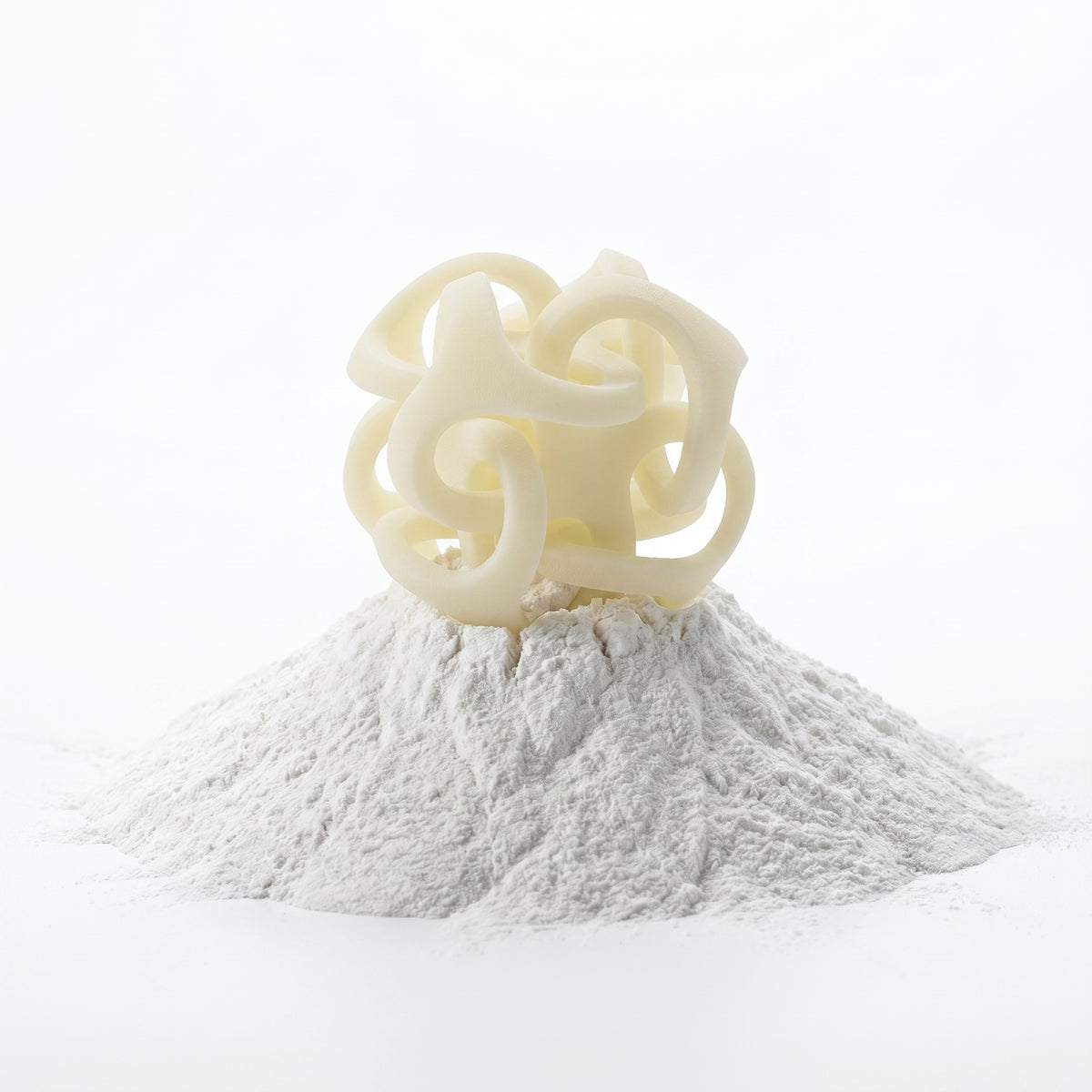
Pó Sinterit PBT Optimal material

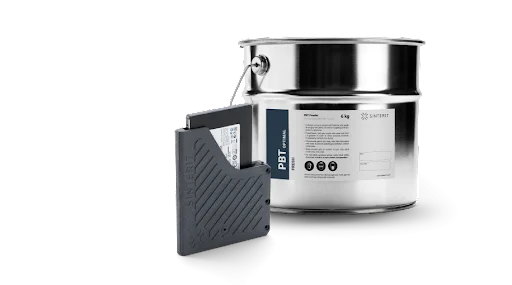
O que você precisa saber sobre este material
Sobre o material
the most economical per print in compact SLS offers sustainable printing without any powder waste when used as intended utilized in medical and dental
the most economical per print in compact SLS offers sustainable printing without any powder waste when used as intended utilized in medical and dental applications manufacturing of electrical and electronic components It is the ratio of a minimum amount of fresh powder needed in a mixture of material used in an SLS 3D printer. A lower refresh ratio means better cost-efficiency of the material. The amount of needed fresh powder is automatically calculated by our software and shown on the printer screen after the print job is finished. Just add shown amount of material into the mixing cycle of used material and you can start your next job with refreshed material To start SLS 3D printing you need the powder starter pack. After that, you’ll only need to refresh the powder you own with fresh powder. We have received the Suzy for printing and started it up with PA 11.5. The first prints turned out really well. But what’s huge is we reduced printing time for a full build space by more than fifty percent. Thank you very much for convincing me to make the switch from PA12. I believe that we will be able to quickly implement a new product line with PA11.5 by the end of the year. Sinterit’s Lisa X has allowed us to reduce lead-times and create better solutions — faster, helping us satisfy our customers. We have looked at other 3D printing methods, and other brands, but ultimately decided on SLS and chose Sinterit for their communication, and open material possibility. Something we couldn’t find in other suppliers of affordable entry level SLS printers. Getting Lisa X solved a lot of our problems. It has a big enough printing area, so we almost always can print big components in one part. It wouldn’t be possible with competitive SLS 3D printing solutions. The main reason Somfy reached out for the SLS technology from Sinterit was productivity. Printing many pieces in one batch was a game-changer When we look at Lisa’s line of printers, or Sinterit at general compared to other companies, the two major things that we liked were the materials, that are open source, so we are not locked into one brand […]. We are able to look around the market and use a material that works best for the part. PBT Optimal is a Polybutylene Terephthalate (PBT) powder designed for SLS 3D printing with the Lisa X. It offers high rigidity, great detailing, excellent chemical resistance, and very low cost per part, making it ideal for cost-conscious applications. PBT Optimal is engineered for cost-effective prototyping and production. It features: – The lowest printing cost per part among Sinterit’s compact SLS materials – Low refresh ratio (20%), meaning minimal waste and reduced material usage – Excellent stiffness and fine detail resolution, ideal for precision components PBT Optimal is specifically optimized for use with the Sinterit Lisa X SLS 3D printer. No, nitrogen is not required when printing with PBT Optimal. PBT Optimal is suited for a wide range of technical and industrial applications, including: – thermoforming molds – electrical and electronic components – electronic enclosures – dental applications – prototyping and rigid tooling components – Tensile strength: ~49 MPa – Tensile modulus: ~2700 MPa – Flexural strength: ~50 MPa – Impact resistance (Charpy unnotched): up to 11.12 kJ/m² – Shore hardness: 77D These figures indicate high stiffness, moderate impact strength, and excellent dimensional stability PBT Optimal performs reliably under moderate heat: – Melting temperature: 172 °C – Heat deflection temperature (HDT A): 52 °C – Softening point (Vicat A50): 93.2 °C These values make it suitable for applications involving moderate thermal stress Yes — when used as intended with a 20% refresh ratio, PBT Optimal allows for sustainable printing with no powder waste, making it an environmentally and economically responsible choice. – Color: Dark Charcoal – Mean particle size (D50): 57 µm This ensures consistent surface quality and high printing resolution Need a 3D Printer tailored for this purpose? Your concerns may include costs, ROI, customer support, print quality, or printing speed. We have helped thousands of companies make the right choice. The Administrator of your personal data is Sinterit Sp. z o.o. with its registered seat in Krakow, ul. Nad Drwina 10 bud. B3, 30-741 Krakow, entered in the register of entrepreneurs kept by the District Court for Krakow - Śródmieście in Kraków, XI Economic Division of the National Court Register under KRS number: 0000535095, tax identification number (NIP): 6793106416. Your personal data will be processed solely for the purpose of providing you with an answer to the enquiry sent via the contact form. The legal basis for the processing is your freely given consent (Article 6(1)(a) of the RODO/GDPR), which is necessary to fulfil the indicated purpose. Your data will be stored for the period necessary to respond or until you withdraw your consent. You may withdraw your given consent to the processing of your personal data at any time, which does not affect the lawfulness of the processing carried out on the basis of your consent before its withdrawal. In addition, you have the right to access, rectify, transfer, erase or restrict the processing of your data and to object to the processing. Detailed information regarding the processing of your personal data is contained in our Privacy Policy (click here). Start Solving Your Production Challenges. Get a tailored SLS solution that delivers quality, ROI & reliability – on your terms. Book a free consultation with our SLS Experts url: http://sinterit.com/wp-content/uploads/2025/07/PBT-Optimal_TDS_for-Lisa-X_EN.pdf local: PBT-Optimal_TDS_for-Lisa-X_EN.pdf www.sinterit.com FEATURES • the most economical per print in compact SLS (Selective Laser Sintering) • low refresh ratio, just 20% • exceptionally high stiffness • great reproduction of intricate details • good mechanical properties • high resistance to chemicals • offers sustainable printing without any powder waste when used as intended APPLICATIONS • cost-effective prototyping • production of thermoforming molds • utilized in dental applications • manufacturing of electrical and electronic components • construction of electronic enclosures • production of rigid tooling components PBT Optimal Polybutylene terephthalate (PBT) enables substantial cost savings in the development and low-volume production of components. It is known for its high rigidity, excellent detailing and resistance to solvents. This material not only provides the high level of detail quality but also ensures the lowest possible cost per part. TDS for Lisa X Material’s Technical Data Sheet Compatible with: www.sinterit.com 1. Refr esh ratio is the amount of refreshing powder that is required to be mixed after the printing with unsintered material. Information provided within this document are average values for reference and comparison only. All tests were performed with print samples from Lisa X printed from the fresh powder. Parameters presented in this specification are subject to change without notice. Final part properties may vary based on printed part design, print orientation, and material handling. All mechanical tests were carried out on samples conditioned to ISO standards at (23 ± 2)°C and (50 ± 5)% r. h. Rev. 21-03-2024 General properties Test method Material Type PBT - Nitrogen needed No - Colour Dark Charcoal - internal Refresh ratio1 20 % internal Bulk density 500-600 kg/m3 PN-EN ISO 60:2011 Printout density 1.24-1.28 PN-EN ISO 845:2010 Printout water absorption 0.12-0.49 % PN-EN ISO 62:2008 Mean particle size D50 57 µm ISO 13320 Mechanical properties Test method Tensile Strength (X direction) 49.04 MPa PN-EN ISO 527-1:2012 Tensile Strength (Y direction) 48.28 MPa PN-EN ISO 527-1:2012 Tensile Modulus (X direction) 2718 MPa PN-EN ISO 527-1:2012 Tensile Modulus (Y direction) 2663 MPa PN-EN ISO 527-1:2012 Elongation at Break (X direction) 2.56 % PN-EN ISO 527-1:2012 Elongation at Break (Y direction) 2.62 % PN-EN ISO 527-1:2012 Flexural Strength (X direction) 52.08 MPa PN-EN ISO 178:2019 Flexural Strength (Y direction) 49.18 MPa PN-EN ISO 178:2019 Flexural Modulus (X direction) 2304 MPa PN-EN ISO 178:2019 Flexural Modulus (Y direction) 2363 MPa PN-EN ISO 178:2019 Impact strength X (Charpy - unnotched) 9.18 kJ/m2 PN-EN ISO 179-1:2010 Impact strength Y (Charpy - unnotched) 11.12 kJ/m2 PN-EN ISO 179-1:2010 Shore Hardness in D scale 77 - PN-EN ISO 868:2005 Thermal properties Test method Melting temperature 172 °C PN-EN ISO 11357-3:2018 HDT A (X direction) 52 °C PN-EN ISO 75-2:2013-06 HDT A (Y direction) 52 °C PN-EN ISO 75-2:2013-06 HDT B (X direction) 81 °C PN-EN ISO 75-2:2013-06 HDT B (Y direction) 70 °C PN-EN ISO 75-2:2013-06 Softening point (Vicat A50) 93.2 °C PN-EN ISO 306:2014-02 g/cm3 url: https://sinterit.com/wp-content/uploads/2025/07/PBT-Optimal_TDS_for-Lisa-X_EN.pdf local: PBT-Optimal_TDS_for-Lisa-X_EN.pdf www.sinterit.com FEATURES • the most economical per print in compact SLS (Selective Laser Sintering) • low refresh ratio, just 20% • exceptionally high stiffness • great reproduction of intricate details • good mechanical properties • high resistance to chemicals • offers sustainable printing without any powder waste when used as intended APPLICATIONS • cost-effective prototyping • production of thermoforming molds • utilized in dental applications • manufacturing of electrical and electronic components • construction of electronic enclosures • production of rigid tooling components PBT Optimal Polybutylene terephthalate (PBT) enables substantial cost savings in the development and low-volume production of components. It is known for its high rigidity, excellent detailing and resistance to solvents. This material not only provides the high level of detail quality but also ensures the lowest possible cost per part. TDS for Lisa X Material’s Technical Data Sheet Compatible with: www.sinterit.com 1. Refr esh ratio is the amount of refreshing powder that is required to be mixed after the printing with unsintered material. Information provided within this document are average values for reference and comparison only. All tests were performed with print samples from Lisa X printed from the fresh powder. Parameters presented in this specification are subject to change without notice. Final part properties may vary based on printed part design, print orientation, and material handling. All mechanical tests were carried out on samples conditioned to ISO standards at (23 ± 2)°C and (50 ± 5)% r. h. Rev. 21-03-2024 General properties Test method Material Type PBT - Nitrogen needed No - Colour Dark Charcoal - internal Refresh ratio1 20 % internal Bulk density 500-600 kg/m3 PN-EN ISO 60:2011 Printout density 1.24-1.28 PN-EN ISO 845:2010 Printout water absorption 0.12-0.49 % PN-EN ISO 62:2008 Mean particle size D50 57 µm ISO 13320 Mechanical properties Test method Tensile Strength (X direction) 49.04 MPa PN-EN ISO 527-1:2012 Tensile Strength (Y direction) 48.28 MPa PN-EN ISO 527-1:2012 Tensile Modulus (X direction) 2718 MPa PN-EN ISO 527-1:2012 Tensile Modulus (Y direction) 2663 MPa PN-EN ISO 527-1:2012 Elongation at Break (X direction) 2.56 % PN-EN ISO 527-1:2012 Elongation at Break (Y direction) 2.62 % PN-EN ISO 527-1:2012 Flexural Strength (X direction) 52.08 MPa PN-EN ISO 178:2019 Flexural Strength (Y direction) 49.18 MPa PN-EN ISO 178:2019 Flexural Modulus (X direction) 2304 MPa PN-EN ISO 178:2019 Flexural Modulus (Y direction) 2363 MPa PN-EN ISO 178:2019 Impact strength X (Charpy - unnotched) 9.18 kJ/m2 PN-EN ISO 179-1:2010 Impact strength Y (Charpy - unnotched) 11.12 kJ/m2 PN-EN ISO 179-1:2010 Shore Hardness in D scale 77 - PN-EN ISO 868:2005 Thermal properties Test method Melting temperature 172 °C PN-EN ISO 11357-3:2018 HDT A (X direction) 52 °C PN-EN ISO 75-2:2013-06 HDT A (Y direction) 52 °C PN-EN ISO 75-2:2013-06 HDT B (X direction) 81 °C PN-EN ISO 75-2:2013-06 HDT B (Y direction) 70 °C PN-EN ISO 75-2:2013-06 Softening point (Vicat A50) 93.2 °C PN-EN ISO 306:2014-02 g/cm3 - img01 · https://sinterit.com/wp-content/uploads/2023/11/PBT-Hero-1.png - img02 · https://sinterit.com/wp-content/uploads/2023/11/PBT-Sample-1.png - img03 · https://sinterit.com/wp-content/uploads/2023/11/PBT-Sample-2.png - img04 · https://sinterit.com/wp-content/uploads/2023/11/PBT-Sample-3.png - img05 · https://sinterit.com/wp-content/uploads/2023/11/PBT-Refresh-1.png - img06 · https://sinterit.com/wp-content/uploads/2022/02/refresh.png.webp - img07 · https://sinterit.com/wp-content/uploads/2021/12/ikona3.png.webp - img08 · https://sinterit.com/wp-content/uploads/2025/10/Peter-Hartung-Fusorthopadie.png - img09 · https://sinterit.com/wp-content/uploads/2025/05/Innoseal-case-study-with-Sinterit-LISA-X-4.png - img10 · https://sinterit.com/wp-content/uploads/2025/05/LISA-X-in-action-case-study-BNP-2.png - img11 · https://sinterit.com/wp-content/uploads/2023/03/compact-Engineering-white.png.webp - img12 · https://sinterit.com/wp-content/uploads/2023/03/Philippe-Bendel_ZI_8310.jpg.webp - img13 · https://sinterit.com/wp-content/uploads/2023/03/Alec_Bialek_IMG_7997.jpg.webp - img14 · https://sinterit.com/wp-content/uploads/2025/05/Innoseal-case-study-with-Sinterit-LISA-X-1.png - img15 · https://sinterit.com/wp-content/uploads/2023/10/WhatsApp-Image-2023-10-20-at-11.23.30.jpeg - img16 · https://sinterit.com/wp-content/uploads/2023/10/Projekt-bez-nazwy-10.png - img17 · https://sinterit.com/wp-content/uploads/2023/08/SLS_Aero_Design_Sinterit.png - img18 · https://sinterit.com/wp-content/uploads/2023/09/Projekt-bez-nazwy-6.png - img19 · https://sinterit.com/wp-content/uploads/2022/11/IMG_7221_4.jpg.webp - img20 · https://sinterit.com/wp-content/uploads/2022/02/order-sample-ilustration.png - img21 · https://sinterit.com/wp-content/uploads/2021/12/PA12smooth_baner-1.png.webp - img22 · https://sinterit.com/wp-content/uploads/2021/12/powders-test2.png.webp - img23 · https://sinterit.com/wp-content/uploads/2021/12/powders-test3.png.webp - img24 · https://sinterit.com/wp-content/uploads/2026/01/Jeanette-Harrelson.png - img25 · https://sinterit.com/wp-content/uploads/2026/03/ChatGPT-Image-2-mar-2026-13_05_03-1.svg - img26 · https://sinterit.com/wp-content/uploads/2026/03/ChatGPT-Image-2-mar-2026-13_05_03-2.svg - img27 · https://sinterit.com/wp-content/uploads/2026/03/ChatGPT-Image-2-mar-2026-13_05_03-3.svg - img28 · https://sinterit.com/wp-content/uploads/2026/03/ChatGPT-Image-2-mar-2026-13_05_03-4.svg - img29 · https://sinterit.com/wp-content/uploads/2026/03/Lisa-X-3D-SLS-printer-Sinterit-1.png - img30 · https://sinterit.com/wp-content/uploads/2026/03/ChatGPT-Image-2-mar-2026-12_50_18-1-1.webp - img31 · https://sinterit.com/wp-content/uploads/2022/03/pricing-item1-1.png.webp - img32 · https://sinterit.com/wp-content/uploads/2022/03/blockp-1.png.webp - img33 · https://sinterit.com/wp-content/uploads/2022/03/blockps.png.webp - img34 · https://sinterit.com/wp-content/uploads/2022/03/blockts.png.webp - img35 · https://sinterit.com/wp-content/uploads/2022/03/image-466.png.webp - img36 · https://sinterit.com/wp-content/uploads/2022/03/1-1.png.webp - img37 · https://sinterit.com/wp-content/uploads/2022/03/5-1.png.webp - img38 · https://sinterit.com/wp-content/uploads/2022/03/4-1.png.webp - img39 · https://sinterit.com/wp-content/uploads/2022/03/3-1.png.webp - img40 · https://sinterit.com/wp-content/uploads/2022/03/2-1.png.webp - item único (grade em embalagem padrão) - preço varia por variação: não capturado (valor NUNCA capturado) screenshot lido: sim · specs tabela: 0 · PDFs c/ texto: 2 imagens: 40 (net) vazios: [preço → ⓐ ignorado por regra]
Como se compara
- a escrever com base na ficha técnica do fornecedor.
Perguntas frequentes
Que máquina processa o PBT Optimal material da Sinterit?
O que é o PBT Optimal material?
Além dos materiais, a Voxel também entrega serviços
Além dos insumos, a Voxel sustenta a sua produção com treinamento, manutenção e capacidade de impressão.

Treinamento
A sua equipe passa a operar com o parâmetro certo, e não por tentativa.
Solicitar orçamento
Manutenção
Preventiva e corretiva, para a máquina não parar no meio de uma produção.
Solicitar orçamento
Impressão sob demanda
Quando o volume aperta ou o prazo não espera, a Voxel imprime para você.
Solicitar orçamento