
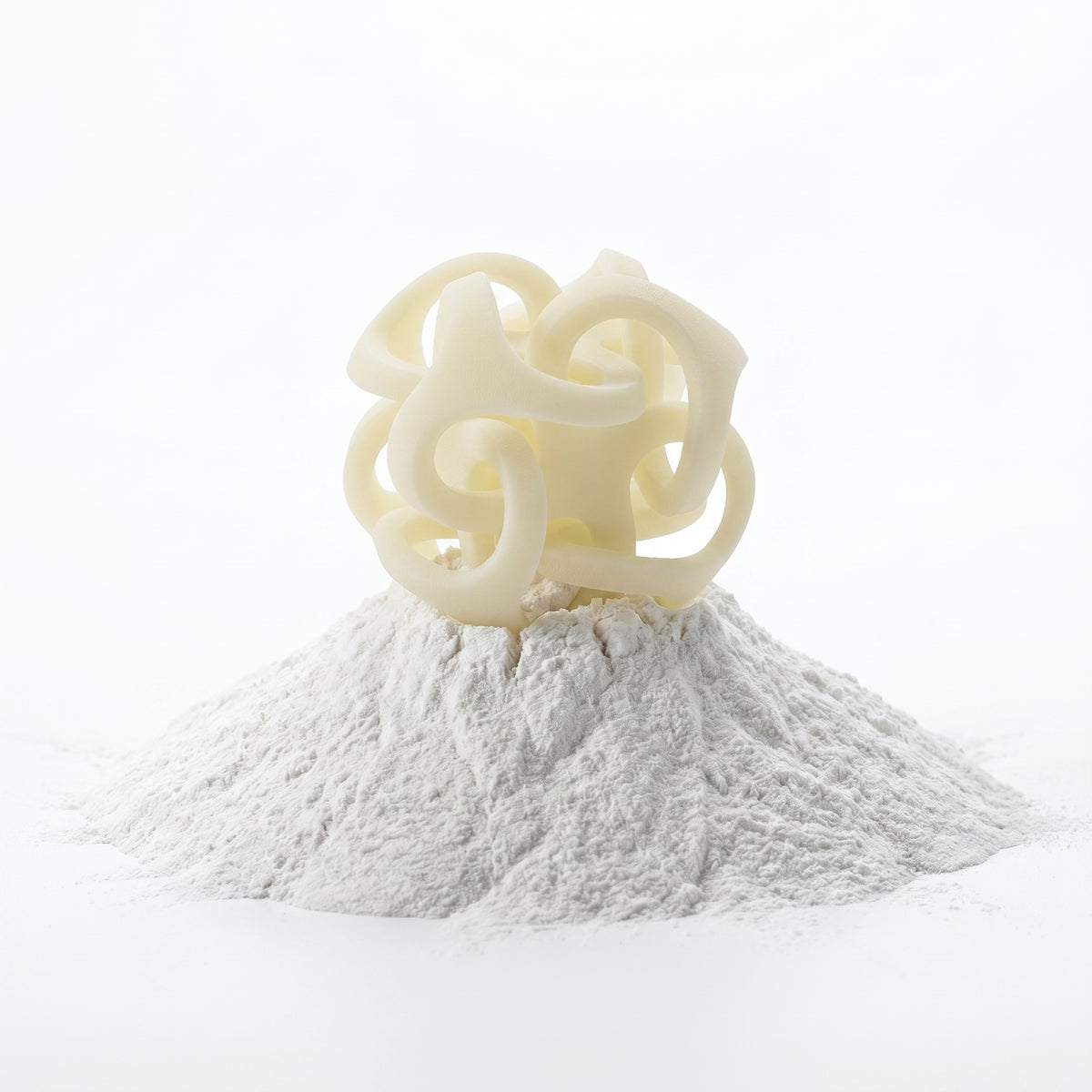
Pó Sinterit PA11 ESD

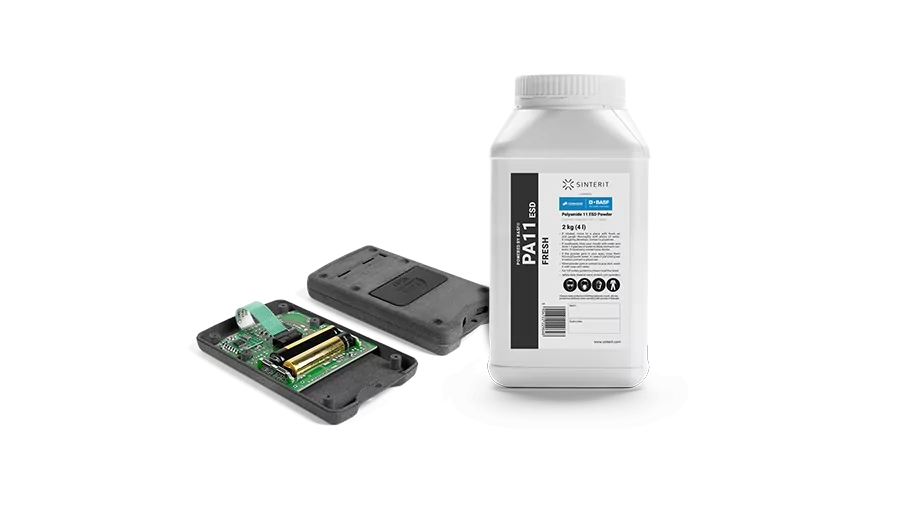
O que você precisa saber sobre este material
Sobre o material
Tools and testers in electronics production Bio-sourced nylon material with heat resistance and ESD functionality It is the ratio of a minimum amount
Tools and testers in electronics production Bio-sourced nylon material with heat resistance and ESD functionality It is the ratio of a minimum amount of fresh powder needed in a mixture of material used in an SLS 3D printer. A lower refresh ratio means better cost-efficiency of the material. The amount of needed fresh powder is automatically calculated by our software and shown on the printer screen after the print job is finished. Just add shown amount of material into the mixing cycle of used material and you can start your next job with refreshed material. We have received the Suzy for printing and started it up with PA 11.5. The first prints turned out really well. But what’s huge is we reduced printing time for a full build space by more than fifty percent. Thank you very much for convincing me to make the switch from PA12. I believe that we will be able to quickly implement a new product line with PA11.5 by the end of the year. Sinterit’s Lisa X has allowed us to reduce lead-times and create better solutions — faster, helping us satisfy our customers. We have looked at other 3D printing methods, and other brands, but ultimately decided on SLS and chose Sinterit for their communication, and open material possibility. Something we couldn’t find in other suppliers of affordable entry level SLS printers. Getting Lisa X solved a lot of our problems. It has a big enough printing area, so we almost always can print big components in one part. It wouldn’t be possible with competitive SLS 3D printing solutions. The main reason Somfy reached out for the SLS technology from Sinterit was productivity. Printing many pieces in one batch was a game-changer When we look at Lisa’s line of printers, or Sinterit at general compared to other companies, the two major things that we liked were the materials, that are open source, so we are not locked into one brand […]. We are able to look around the market and use a material that works best for the part. Starter powder is basically a print-ready powder. In Sinterit we distinguish three powder conditions: print-ready, used, and fresh. Used is a type of powder that you get after the printing, present in overflow bin or remaining after printout cleaning. Fresh is a type of powder that is being used for refreshing the powder. After mixing this powder with used powder you will receive print-ready. Print-ready is a type of powder that you can simply pour into the printer and start printing. Although printing using Fresh is possible it’s not economically optimal therefore Sinterit printers are optimized for using a refreshed (print-ready) powder. SLS polyamide powder used for 3D printing is considered particulate matter because of its size. Polyamide powder particles are generally 40 micrometers or smaller. If vacuumed in an ordinary vacuum cleaner, the powder could cause an explosion. Such materials are subject to labor regulations on air quality and occupational safety. The procedures call for appropriate maintenance of powder at work. Only certified industrial vacuum cleaners should be used to clean such materials. More information about the ATEX Vacuum cleaner can be found here. Contact Sinterit support with your questions. Definitely. PA11 ESD is antistatic, dimensionally stable, and has excellent thermal properties – it is perfect for printing highly accurate components, electronic enclosures, or tools in electronics manufacturing. PA11 ESD is a bio-sourced nylon powder with electrostatic discharge (ESD) protection and enhanced heat resistance. It is designed for creating parts that require both dimensional stability and protection against electrostatic buildup. Yes, it is a bio-sourced nylon material, making it a more sustainable option for industrial-grade 3D printing. ESD stands for Electrostatic Discharge. ESD-safe materials like PA11 ESD are crucial in electronics and automotive industries to prevent static damage to sensitive components. This material is compatible with the Sinterit Lisa X printer. PA11 ESD requires a nitrogen atmosphere to maintain optimal print quality and material stability during the SLS printing process. The material has high dimensional stability and a low water absorption rate of only 0.16%. It’s ideal for producing tools and testers used in electronics, electronic casings, automotive components, and other high-precision technical parts. Yes, PA11 ESD is well-suited for automotive parts that require heat resistance and antistatic protection. Absolutely. Thanks to its ESD-safe properties, PA11 ESD is perfect for printing casings and structural parts that house or interact with electronics. The recommended refresh ratio is 60%, meaning 60% fresh powder should be mixed with used powder after each print. Printing with this material is supported through Sinterit Studio Advanced software. Properties may vary depending on part design, print orientation, and post-processing. Optimizing part geometry and layout can significantly affect strength and surface quality. Yes, if the refresh ratio and storage conditions are properly maintained, consistent performance can be expected. Need a 3D Printer tailored for this purpose? Your concerns may include costs, ROI, customer support, print quality, or printing speed. We have helped thousands of companies make the right choice. The Administrator of your personal data is Sinterit Sp. z o.o. with its registered seat in Krakow, ul. Nad Drwina 10 bud. B3, 30-741 Krakow, entered in the register of entrepreneurs kept by the District Court for Krakow - Śródmieście in Kraków, XI Economic Division of the National Court Register under KRS number: 0000535095, tax identification number (NIP): 6793106416. Your personal data will be processed solely for the purpose of providing you with an answer to the enquiry sent via the contact form. The legal basis for the processing is your freely given consent (Article 6(1)(a) of the RODO/GDPR), which is necessary to fulfil the indicated purpose. Your data will be stored for the period necessary to respond or until you withdraw your consent. You may withdraw your given consent to the processing of your personal data at any time, which does not affect the lawfulness of the processing carried out on the basis of your consent before its withdrawal. In addition, you have the right to access, rectify, transfer, erase or restrict the processing of your data and to object to the processing. Detailed information regarding the processing of your personal data is contained in our Privacy Policy (click here). Start Solving Your Production Challenges. Get a tailored SLS solution that delivers quality, ROI & reliability – on your terms. Book a free consultation with our SLS Experts Save time and simplify the decision-making process when choosing a 3D printer tailored for your project. Your checklist is on its way please check your inbox The Administrator of your personal data is Sinterit Sp. z o.o. with its registered seat in Krakow, ul. Nad Drwina 10 bud. B3, 30-741 Krakow, entered in the register of entrepreneurs kept by the District Court for Krakow – Śródmieście in Kraków, XI Economic Division of the National Court Register under KRS number: 0000535095, tax identification number (NIP): 6793106416. Your personal data will be processed solely for the purpose of providing you with an answer to the enquiry sent via the contact form. The legal basis for the processing is your freely given consent (Article 6(1)(a) of the RODO/GDPR), which is necessary to fulfil the indicated purpose. Your data will be stored for the period necessary to respond or until you withdraw your consent. You may withdraw your given consent to the processing of your personal data at any time, which does not affect the lawfulness of the processing carried out on the basis of your consent before its withdrawal. In addition, you have the right to access, rectify, transfer, erase or restrict the processing of your data and to object to the processing. Detailed information regarding the processing of your personal data is contained in our Privacy Policy ( click here ). more url: http://sinterit.com/wp-content/uploads/2025/06/PA11-ESD_2025_EN.pdf local: PA11-ESD_2025_EN.pdf General properties Test method Software Sinterit Studio Advanced - Nitrogen needed yes - Colour grey - internal Refresh ratio1 60 % internal Printout density 1.03 g/cm3 PN-EN ISO 845:2010 Printout water absorption 0.16 % PN-EN ISO 62:2008 Particle size 20-80 µm ISO 13320 Mean particle size 45 µm ISO 13320 www.sinterit.com FEATURES • antistatic properties • better thermal properties • dimension stability APPLICATIONS • tools and testers in electronics production • electronic casing • automotive parts • high-accuracy parts PA 11 ESD Bio-sourced nylon material with heat resistance and ESD functionality. Dedicated for electrostatic safe parts for electronic and automotive industries. TDS for Lisa X Material’s Technical Data Sheet Compatible with: www.sinterit.com 1. Refresh ratio is the amount of refreshing powder that is required to be mixed after the printing with unsintered material. 2. Depend on print geometry. Information provided within this document are average values for reference and comparison only. All tests were performed with print samples from Lisa PRO printed from the fresh powder. Parameters presented in this specification are subject to change without notice. Final part properties may vary based on printed part design, print orientation, and material handling. All mechanical tests were carried out on samples conditioned to ISO standards at (23 ± 2)°C and (50 ± 5)% r. h. Rev. 22-05-2025 Mechanical properties Test method Tensile Strength (X direction) 50 MPa PN-EN ISO 527-1:2012 Tensile Modulus (X direction) 2080 MPa PN-EN ISO 527-1:2012 Elongation at Break (X direction) 28 % PN-EN ISO 527-1:2012 Flexural Strength (X direction) 56 MPa PN-EN ISO 178:2019 Flexural Modulus (X direction) 1240 MPa PN-EN ISO 178:2019 Impact strength X (Charpy - unnotched) 59 kJ/m2 PN-EN ISO 179-1:2010 Shore Hardness in D scale 76 PN-EN ISO 868:2005 Thermal properties Test method Melting temperature 204 °C PN-EN ISO 11357:2018 HDT A 103 °C PN-EN ISO 179-1:2010 HDT B 172 °C PN-EN ISO 306:2014-02 ESD Properties2 Test method Specific volume resistance 10x105 Ωcm IEC 62631-3-1 Specific surface resistance 5.3x10⁴ Ω IEC 62631-3-2 url: https://sinterit.com/wp-content/uploads/2025/06/PA11-ESD_2025_EN.pdf local: PA11-ESD_2025_EN.pdf General properties Test method Software Sinterit Studio Advanced - Nitrogen needed yes - Colour grey - internal Refresh ratio1 60 % internal Printout density 1.03 g/cm3 PN-EN ISO 845:2010 Printout water absorption 0.16 % PN-EN ISO 62:2008 Particle size 20-80 µm ISO 13320 Mean particle size 45 µm ISO 13320 www.sinterit.com FEATURES • antistatic properties • better thermal properties • dimension stability APPLICATIONS • tools and testers in electronics production • electronic casing • automotive parts • high-accuracy parts PA 11 ESD Bio-sourced nylon material with heat resistance and ESD functionality. Dedicated for electrostatic safe parts for electronic and automotive industries. TDS for Lisa X Material’s Technical Data Sheet Compatible with: www.sinterit.com 1. Refresh ratio is the amount of refreshing powder that is required to be mixed after the printing with unsintered material. 2. Depend on print geometry. Information provided within this document are average values for reference and comparison only. All tests were performed with print samples from Lisa PRO printed from the fresh powder. Parameters presented in this specification are subject to change without notice. Final part properties may vary based on printed part design, print orientation, and material handling. All mechanical tests were carried out on samples conditioned to ISO standards at (23 ± 2)°C and (50 ± 5)% r. h. Rev. 22-05-2025 Mechanical properties Test method Tensile Strength (X direction) 50 MPa PN-EN ISO 527-1:2012 Tensile Modulus (X direction) 2080 MPa PN-EN ISO 527-1:2012 Elongation at Break (X direction) 28 % PN-EN ISO 527-1:2012 Flexural Strength (X direction) 56 MPa PN-EN ISO 178:2019 Flexural Modulus (X direction) 1240 MPa PN-EN ISO 178:2019 Impact strength X (Charpy - unnotched) 59 kJ/m2 PN-EN ISO 179-1:2010 Shore Hardness in D scale 76 PN-EN ISO 868:2005 Thermal properties Test method Melting temperature 204 °C PN-EN ISO 11357:2018 HDT A 103 °C PN-EN ISO 179-1:2010 HDT B 172 °C PN-EN ISO 306:2014-02 ESD Properties2 Test method Specific volume resistance 10x105 Ωcm IEC 62631-3-1 Specific surface resistance 5.3x10⁴ Ω IEC 62631-3-2 url: https://sinterit.com/wp-content/uploads/2022/02/PA11-ESD_GB-en_10.pdf local: PA11-ESD_GB-en_10.pdf Safety Data Sheet Sinterit Sp. z o. o. PA11 ESD Revision date: 12.11.2020 Print date: 12.11.2020 according to Regulation (EC) No 1907/2006 SECTION 1: Identification of the substance/mixture and of the company/undertaking PA11 ESD 1.1. Product identifier Product code: 11. UFI (Unique Formula Identifier) 3Y00-H0C4-X002-3MVJ Further trade names 1.2. Relevant identified uses of the substance or mixture and uses advised against Use of the substance/mixture Powder material for selective laser sintering (SLS) process Any non-intended use. Uses advised against 1.3. Details of the supplier of the safety data sheet Sinterit Sp. z o. o.Company name: Street: Nad Drwina 10 bud. B3 Place: PL-30-741 Krakow Telephone: +48 570 697 854 contact@sinterit.come-mail: K. GlowackiContact person: E-Mail: contact@sinterit.com Sinterit sp. z o.o., Nad Drwina 10 bud. B3, 30-741 Krakow, Poland Responsible Department: Poison Information Center Mainz, Germany, Tel: +49 (6131) 192401.4. Emergency telephone number: SECTION 2: Hazards identification 2.2. Label elements Additional advice on labelling Labelling according to Regulation (EC) No. 1272/2008 [CLP]: none The substances in the mixture do not meet the PBT/vPvB criteria according to REACH, annex XIII. No risks worthy of mention. Please observe the information on the safety data sheet at all times. 2.3. Other hazards SECTION 3: Composition/information on ingredients 3.2. Mixtures Hazardous components QuantityChemical nameCAS No EC No Index No REACH No GHS Classification 10 %7440-44-0 carbon 931-328-0 01-2119488894-16 Full text of H and EUH statements: see section 16. GB - ENRevision No: 1,0 Page 1 of 10 Safety Data Sheet Sinterit Sp. z o. o. PA11 ESD Revision date: 12.11.2020 Print date: 12.11.2020 according to Regulation (EC) No 1907/2006 Further Information Product does not contain listed SVHC substances > 0,1 % according to Regulation (EC) No. 1907/2006 Article 59 (REACH) SECTION 4: First aid measures 4.1. Description of first aid measures In case of accident or unwellness, seek medical advice immediately (show directions for use or safety data sheet if possible). General information In case of accident by inhalation: remove casualty to fresh air and keep at rest. In case of respiratory tract irritation, consult a physician. After inhalation Gently wash with plenty of soap and water. In case of skin irritation, seek medical treatment. After contact with skin Rinse cautiously with water for several minutes. In case of troubles or persistent symptoms, consult an ophthalmologist. After contact with eyes Rinse mouth thoroughly with water. Let water be drunken in little sips (dilution effect). Do NOT induce vomiting. In all cases of doubt, or when symptoms persist, seek medical advice. After ingestion 4.2. Most important symptoms and effects, both acute and delayed No information available. 4.3. Indication of any immediate medical attention and special treatment needed Treat symptomatically. SECTION 5: Firefighting measures 5.1. Extinguishing media Carbon dioxide (CO2). Dry extinguishing powder. alcohol resistant foam. Atomized water. Suitable extinguishing media High power water jet. Unsuitable extinguishing media 5.2. Special hazards arising from the substance or mixture Can be released in case of fire: Carbon monoxide Carbon dioxide (CO2). In case of fire: Wear self-contained breathing apparatus. 5.3. Advice for firefighters Collect contaminated fire extinguishing water separately. Do not allow entering drains or surface water. Co-ordinate fire-fighting measures to the fire surroundings. Additional information SECTION 6: Accidental release measures 6.1. Personal precautions, protective equipment and emergency procedures Avoid dust formation. Do not breathe dust. GB - ENRevision No: 1,0 Page 2 of 10 Safety Data Sheet Sinterit Sp. z o. o. PA11 ESD Revision date: 12.11.2020 Print date: 12.11.2020 according to Regulation (EC) No 1907/2006 Wear personal protection equipment (refer to section 8). Discharge into the environment must be avoided. 6.2. Environmental precautions Take up mechanically. Treat the recovered material as prescribed in the section on waste disposal. Clean contaminated objects and areas thoroughly observing environmental regulations. 6.3. Methods and material for containment and cleaning up Safe handling: see section 7 Personal protection equipment: see section 8 Disposal: see section 13 6.4. Reference to other sections SECTION 7: Handling and storage 7.1. Precautions for safe handling Wear personal protection equipment (refer to section 8). Advice on safe handling Usual measures for fire prevention. Dust clouds may present an explosion hazard. Advice on protection against fire and explosion Avoid generation of dust. General protection and hygiene measures: refer to chapter 8 Further information on handling 7.2. Conditions for safe storage, including any incompatibilities Keep container tightly closed in a cool, well-ventilated place. Requirements for storage rooms and vessels Do not store together with: Explosives. Oxidizing solids. Oxidizing liquids. Radioactive substances. Infectious substances. Food and animal feedingstuff. Hints on joint storage Keep the packing dry and well sealed to prevent contamination and absorbtion of humidity. Recommended storage temperature: 20°C Protect against: heat. (> 60°C). Humidity Further information on storage conditions 7.3. Specific end use(s) See section 1. SECTION 8: Exposure controls/personal protection 8.1. Control parameters Exposure limits (EH40) Categoryfibres/mlmg/m³ppmSubstanceCAS No Origin TWA (8 h)-Graphite, respirable7440-44-0 4 WEL DNEL/DMEL values CAS No Substance DNEL type Exposure route Effect Value GB - ENRevision No: 1,0 Page 3 of 10 Safety Data Sheet Sinterit Sp. z o. o. PA11 ESD Revision date: 12.11.2020 Print date: 12.11.2020 according to Regulation (EC) No 1907/2006 7440-44-0 carbon Worker DNEL, long-term inhalation local 1,84 mg/m³ Consumer DNEL, long-term inhalation local 0,9 mg/m³ PNEC values SubstanceCAS No Environmental compartment Value 7440-44-0 carbon Soil 10 mg/kg 8.2. Exposure controls Technical measures and the application of suitable work processes have priority over personal protection equipment. Dust should be exhausted directly at the point of origin. Appropriate engineering controls Always close containers tightly after the removal of product. When using do not eat, drink, smoke, sniff. Wash hands before breaks and after work. Protective and hygiene measures Dust protection goggles. Eye/face protection In case of prolonged or frequently repeated skin contact: Wear suitable gloves. Suitable material: FKM (fluororubber). - Thickness of glove material: 0,4 mm Breakthrough time >= 8 h Butyl rubber. - Thickness of glove material: 0,5 mm Breakthrough time >= 8 h CR (polychloroprenes, Chloroprene rubber). - Thickness of glove material: 0,5 mm Breakthrough time >= 8 h NBR (Nitrile rubber). - Thickness of glove material: 0,35 mm Breakthrough time >= 8 h PVC (Polyvinyl chloride). - Thickness of glove material: 0,5 mm Breakthrough time >= 8 h The selected protective gloves have to satisfy the specifications of EU Directive EC/2016/425 and the standard EN 374 derived from it. Before using check leak tightness / impermeability. In the case of wanting to use the gloves again, clean them before taking off and air them well. Hand protection Suitable protective clothing: Protective clothing. Minimum standard for preventive measures while handling with working materials are specified in the TRGS 500 (D). Skin protection With correct and proper use, and under normal conditions, breathing protection is not required. Respiratory protection necessary at: -Exceeding exposure limit values -Insufficient ventilation. and Generation/formation of dust Suitable respiratory protective equipment: particulates filter device (DIN EN 143). Type: P2-3 Respiratory protection GB - ENRevision No: 1,0 Page 4 of 10 Safety Data Sheet Sinterit Sp. z o. o. PA11 ESD Revision date: 12.11.2020 Print date: 12.11.2020 according to Regulation (EC) No 1907/2006 The filter class must be suitable for the maximum contaminant concentration (gas/vapour/aerosol/particulates) that may arise when handling the product. If the concentration is exceeded, self-contained breathing apparatus must be used. No special precautionary measures are necessary. Environmental exposure controls Powder, solidPhysical state: 9.1. Information on basic physical and chemical properties SECTION 9: Physical and chemical properties Colour: grey characteristicOdour: pH-Value: not determined Changes in the physical state 198 - 210 °CMelting point: not determinedInitial boiling point and boiling range: not determinedSublimation point: not determinedSoftening point: not determinedPour point: not determinedFlash point: Sustaining combustion: Not sustaining combustion Dust clouds may present an explosion hazard. Dust explosive, Dust explosion category: ST 2 KSt-value (bar x m/s): 200 - 300 Explosive properties not determinedLower explosion limits: not determinedUpper explosion limits: > 450 °CIgnition temperature: Auto-ignition temperature not determinedGas: not determinedDecomposition temperature: none Oxidizing properties Vapour pressure: not determined Density: not determined Bulk density: 530 kg/m³ Water solubility: Immiscible Solubility in other solvents not determined not determinedPartition coefficient: Viscosity / dynamic: not determined Viscosity / kinematic: not determined Flow time: not applicable GB - ENRevision No: 1,0 Page 5 of 10 Safety Data Sheet Sinterit Sp. z o. o. PA11 ESD Revision date: 12.11.2020 Print date: 12.11.2020 according to Regulation (EC) No 1907/2006 Vapour density: not applicable Evaporation rate: not applicable not applicableSolvent separation test: not determinedSolvent content: 9.2. Other information not determinedSolid content: UN Test N.4: Test method for self-heating substances: negative. Particle size in µm: D10: 18; D50: 43,9; D90: 80,1 SECTION 10: Stability and reactivity 10.1. Reactivity No information available. 10.2. Chemical stability The product is chemically stable under recommended conditions of storage, use and temperature. 10.3. Possibility of hazardous reactions Refer to chapter 10.5. Protect against: UV-radiation/sunlight. heat.(> 60°C) 10.4. Conditions to avoid Materials to avoid: Oxidizing agents, strong. Reducing agents, strong. Strong acid. 10.5. Incompatible materials Can be released in case of fire: Carbon monoxide Carbon dioxide (CO2). 10.6. Hazardous decomposition products SECTION 11: Toxicological information 11.1. Information on toxicological effects Toxicocinetics, metabolism and distribution No data available. Acute toxicity Based on available data, the classification criteria are not met. Chemical nameCAS No SourceSpeciesDoseExposure route Method 7440-44-0 carbon RatLD50 > 2000 mg/kg ECHA Dossieroral OECD Guideline 423 Based on available data, the classification criteria are not met. Irritation and corrosivity Sensitising effects Based on available data, the classification criteria are not met. Carcinogenic/mutagenic/toxic effects for reproduction Based on available data, the classification criteria are not met. GB - ENRevision No: 1,0 Page 6 of 10 Safety Data Sheet Sinterit Sp. z o. o. PA11 ESD Revision date: 12.11.2020 Print date: 12.11.2020 according to Regulation (EC) No 1907/2006 STOT-single exposure Based on available data, the classification criteria are not met. Based on available data, the classification criteria are not met. STOT-repeated exposure Aspiration hazard Based on available data, the classification criteria are not met. No data available. Specific effects in experiment on an animal SECTION 12: Ecological information 12.1. Toxicity The product has not been tested. 12.2. Persistence and degradability The product has not been tested. 12.3. Bioaccumulative potential No indication of bioaccumulation potential. No data available. 12.4. Mobility in soil 12.5. Results of PBT and vPvB assessment The substances in the mixture do not meet the PBT/vPvB criteria according to REACH, annex XIII. No data available. 12.6. Other adverse effects Do not allow to enter into surface water or drains. Further information SECTION 13: Disposal considerations 13.1. Waste treatment methods Disposal recommendations Observe in addition any national regulations! Consult the local waste disposal expert about waste disposal. Non-contaminated packages may be recycled. According to (EWC) European Waste Catalogue, allocation of waste identity numbers/waste descriptions must be carried out in a specific way for every industry and process. Control report for waste code/ waste marking according to (EWC) European Waste Catalogue: List of Wastes Code - residues/unused products 200139 MUNICIPAL WASTES (HOUSEHOLD WASTE AND SIMILAR COMMERCIAL, INDUSTRIAL AND INSTITUTIONAL WASTES) INCLUDING SEPARATELY COLLECTED FRACTIONS; separately collected fractions (except 15 01); Plastics List of Wastes Code - used product MUNICIPAL WASTES (HOUSEHOLD WASTE AND SIMILAR COMMERCIAL, INDUSTRIAL AND INSTITUTIONAL WASTES) INCLUDING SEPARATELY COLLECTED FRACTIONS; separately collected fractions (except 15 01); Plastics 200139 List of Wastes Code - contaminated packaging GB - ENRevision No: 1,0 Page 7 of 10 Safety Data Sheet Sinterit Sp. z o. o. PA11 ESD Revision date: 12.11.2020 Print date: 12.11.2020 according to Regulation (EC) No 1907/2006 WASTE PACKAGING; ABSORBENTS, WIPING CLOTHS, FILTER MATERIALS AND PROTECTIVE CLOTHING NOT OTHERWISE SPECIFIED; packaging (including separately collected municipal packaging waste); mixed packaging 150106 Handle contaminated packages in the same way as the substance itself. Contaminated packaging SECTION 14: Transport information Land transport (ADR/RID) 14.1. UN number: No dangerous good in sense of this transport regulation. No dangerous good in sense of this transport regulation.14.2. UN proper shipping name: No dangerous good in sense of this transport regulation.14.3. Transport hazard class(es): 14.4. Packing group: No dangerous good in sense of this transport regulation. Inland waterways transport (ADN) 14.1. UN number: No dangerous good in sense of this transport regulation. 14.2. UN proper shipping name: No dangerous good in sense of this transport regulation. 14.3. Transport hazard class(es): No dangerous good in sense of this transport regulation. 14.4. Packing group: No dangerous good in sense of this transport regulation. Marine transport (IMDG) 14.1. UN number: No dangerous good in sense of this transport regulation. No dangerous good in sense of this transport regulation.14.2. UN proper shipping name: 14.3. Transport hazard class(es): No dangerous good in sense of this transport regulation. 14.4. Packing group: No dangerous good in sense of this transport regulation. Air transport (ICAO-TI/IATA-DGR) 14.1. UN number: No dangerous good in sense of this transport regulation. No dangerous good in sense of this transport regulation.14.2. UN proper shipping name: No dangerous good in sense of this transport regulation.14.3. Transport hazard class(es): No dangerous good in sense of this transport regulation.14.4. Packing group: 14.5. Environmental hazards NoENVIRONMENTALLY HAZARDOUS: 14.6. Special precautions for user Refer to section 6-8 14.7. Transport in bulk according to Annex II of Marpol and the IBC Code not relevant SECTION 15: Regulatory information 15.1. Safety, health and environmental regulations/legislation specific for the substance or mixture EU regulatory information No information available.2010/75/EU (VOC): No information available.2004/42/EC (VOC): Information according to 2012/18/EU (SEVESO III): Not subject to 2012/18/EU (SEVESO III) GB - ENRevision No: 1,0 Page 8 of 10 Safety Data Sheet Sinterit Sp. z o. o. PA11 ESD Revision date: 12.11.2020 Print date: 12.11.2020 according to Regulation (EC) No 1907/2006 Additional information Safety Data Sheet according to Regulation (EC) No. 1907/2006 (amended by Regulation (EU) No 2020/878) The mixture is classified as not hazardous according to regulation (EC) No 1272/2008 [CLP]. REACH 1907/2006 Appendix XVII, No (mixture): not relevant National regulatory information Additional information Water hazard class (WGK): not determined 15.2. Chemical safety assessment For the following substances of this mixture a chemical safety assessment has been carried out: SECTION 16: Other information Changes Rev. 1.0; Initial release Abbreviations and acronyms ADR: Accord européen sur le transport des marchandises dangereuses par Route ( European Agreement concerning the International Carriage of Dangerous Goods by Road) CAS Chemical Abstracts Service CLP: Classification, Labelling and Packaging of substances and mixtures DNEL: Derived No Effect Level d: day(s) EINECS: European INventory of Existing Commercial chemical Substances ELINCS: European LIst of Notified Chemical Substances ECHA: European Chemicals Agency EWC: European Waste Catalogue IARC: INTERNATIONAL AGENCY FOR RESEARCH ON CANCER IMDG: International Maritime Code for Dangerous Goods IATA: International Air Transport Association IATA-DGR: Dangerous Goods Regulations by the "International Air Transport Association" (IATA) ICAO: International Civil Aviation Organization ICAO-TI: Technical Instructions by the "International Civil Aviation Organization" (ICAO) GHS: Globally Harmonized System of Classification and Labelling of Chemicals GefStoffV: Gefahrstoffverordnung (Ordinance on Hazardous Substances, Germany) h: hour LOAEL: Lowest observed adverse effect level LOAEC: Lowest observed adverse effect concentration LC50: Lethal concentration, 50 percent LD50: Lethal dose, 50 percent NOAEL: No observed adverse effect level NOAEC: No observed adverse effect concentration NLP: No-Longer Polymers N/A: not applicable OECD: Organisation for Economic Co-operation and Development PNEC: predicted no effect concentration PBT: Persistent bioaccumulative toxic RID: Règlement international concernant le transport des marchandises dangereuses par chemin de fer (Regulations Concerning the International Transport of Dangerous Goods by Rail ) REACH: Registration, Evaluation, Authorisation of Chemicals GB - ENRevision No: 1,0 Page 9 of 10 Safety Data Sheet Sinterit Sp. z o. o. PA11 ESD Revision date: 12.11.2020 Print date: 12.11.2020 according to Regulation (EC) No 1907/2006 SVHC: substance of very high concern TRGS: Technische Regeln für Gefahrstoffe UN: United Nations VOC: Volatile Organic Compounds Classification according to Regulation (EC) No 1272/2008 [CLP] - Classification procedure: Health hazards: Calculation method. Environmental hazards: Calculation method. Physical hazards: On basis of test data and / or calculated and / or estimated. The above information describes exclusively the safety requirements of the product and is based on our present-day knowledge. The information is intended to give you advice about the safe handling of the product named in this safety data sheet, for storage, processing, transport and disposal. The information cannot be transferred to other products. In the case of mixing the product with other products or in the case of processing, the information on this safety data sheet is not necessarily valid for the new made-up material. Further Information (The data for the hazardous ingredients were taken respectively from the last version of the sub-contractor's safety data sheet.) GB - ENRevision No: 1,0 Page 10 of 10 url: https://sinterit.com/wp-content/uploads/2022/06/PA11-ESD-EN.pdf local: PA11-ESD-EN.pdf FEATURES • antistatic properties • better thermal properties • dimension stability APPLICATIONS • tools and testers in electronics production • electronic casing • automotive parts • high-accuracy parts www.sinterit.com Material’s Technical Data Sheet Compatible with: 1 1. Available on request. 2. Refresh ratio is the amount of refreshing powder that is required to be mixed after the printing with unsintered material. Information provided within this document are average values for reference and comparison only. All tests were performed with print samples from Lisa/Lisa Pro printers. Parameters presented in this specification are subject to change without notice. Final part properties may vary based on printed part design, print orientation and material handling. General information Test method Material type Nylon 11 Software Sinterit Studio Advanced Nitrogen needed Yes Refresh ratio2 60 % Colour grey Particle size 20-80 µm ISO 13320 Mean particle size 45 µm ISO 13320 Printout density 1.03 g/cm3 PN-EN ISO 1183-1 Printout water absorption 0.16 % PN-EN ISO 62:2008 PA 11 ESD Bio-sourced nylon material with heat resistance and ESD functionality. Dedicated for electrostatic safe parts for electronic and automotive industries. www.sinterit.com 3. Tested on virgin powder. Information provided within this document are average values for reference and comparison only. All tests were performed with print samples from Lisa/Lisa Pro printers. Parameters presented in this specification are subject to change without notice. Final part properties may vary based on printed part design, print orientation and material handling. Rev: 13-04-2022 Mechanical properties Test method Tensile Strength 46/503 MPa PN-EN ISO 527-2:2012 Elongation at Break 27/283 MPa PN-EN ISO 527-2:2012 Tensile Modulus 1850/20803 MPa PN- EN ISO 527- 2:2012 Flexural Strength 56 MPa PN-EN ISO 178:2019 Flexural Modulus 1240 MPa PN-EN ISO 178:2019 Shore hardness in type D scale 76 PN-EN ISO 868:2005 Impact strength (Charpy method - unnotched) 59 kJ/m2 PN-EN ISO 179- 1/1eU:2010 Thermal properties Test method Melting point 204 °C Internal procedure Heat Deflection Temperature A at 1.8 MPa 103 °C PN-EN ISO 75-2:2013-06 / PN-EN ISO 75-2:1998 Heat Deflection Temperature B at 0.45 MPa 172 °C PN-EN ISO 75-2:2013-06 / PN-EN ISO 75-2:1998 ESD properties Test method Specific volume resistance 1.0×10⁵ Ωcm IEC 62631-3-1 Specific surface resistance 5.3×10⁴ Ω IEC 62631-3-2 url: https://sinterit.com/wp-content/uploads/2022/01/PA11-ESD_GB-en_10.pdf local: PA11-ESD_GB-en_10.pdf Safety Data Sheet Sinterit Sp. z o. o. PA11 ESD Revision date: 12.11.2020 Print date: 12.11.2020 according to Regulation (EC) No 1907/2006 SECTION 1: Identification of the substance/mixture and of the company/undertaking PA11 ESD 1.1. Product identifier Product code: 11. UFI (Unique Formula Identifier) 3Y00-H0C4-X002-3MVJ Further trade names 1.2. Relevant identified uses of the substance or mixture and uses advised against Use of the substance/mixture Powder material for selective laser sintering (SLS) process Any non-intended use. Uses advised against 1.3. Details of the supplier of the safety data sheet Sinterit Sp. z o. o.Company name: Street: Nad Drwina 10 bud. B3 Place: PL-30-741 Krakow Telephone: +48 570 697 854 contact@sinterit.come-mail: K. GlowackiContact person: E-Mail: contact@sinterit.com Sinterit sp. z o.o., Nad Drwina 10 bud. B3, 30-741 Krakow, Poland Responsible Department: Poison Information Center Mainz, Germany, Tel: +49 (6131) 192401.4. Emergency telephone number: SECTION 2: Hazards identification 2.2. Label elements Additional advice on labelling Labelling according to Regulation (EC) No. 1272/2008 [CLP]: none The substances in the mixture do not meet the PBT/vPvB criteria according to REACH, annex XIII. No risks worthy of mention. Please observe the information on the safety data sheet at all times. 2.3. Other hazards SECTION 3: Composition/information on ingredients 3.2. Mixtures Hazardous components QuantityChemical nameCAS No EC No Index No REACH No GHS Classification 10 %7440-44-0 carbon 931-328-0 01-2119488894-16 Full text of H and EUH statements: see section 16. GB - ENRevision No: 1,0 Page 1 of 10 Safety Data Sheet Sinterit Sp. z o. o. PA11 ESD Revision date: 12.11.2020 Print date: 12.11.2020 according to Regulation (EC) No 1907/2006 Further Information Product does not contain listed SVHC substances > 0,1 % according to Regulation (EC) No. 1907/2006 Article 59 (REACH) SECTION 4: First aid measures 4.1. Description of first aid measures In case of accident or unwellness, seek medical advice immediately (show directions for use or safety data sheet if possible). General information In case of accident by inhalation: remove casualty to fresh air and keep at rest. In case of respiratory tract irritation, consult a physician. After inhalation Gently wash with plenty of soap and water. In case of skin irritation, seek medical treatment. After contact with skin Rinse cautiously with water for several minutes. In case of troubles or persistent symptoms, consult an ophthalmologist. After contact with eyes Rinse mouth thoroughly with water. Let water be drunken in little sips (dilution effect). Do NOT induce vomiting. In all cases of doubt, or when symptoms persist, seek medical advice. After ingestion 4.2. Most important symptoms and effects, both acute and delayed No information available. 4.3. Indication of any immediate medical attention and special treatment needed Treat symptomatically. SECTION 5: Firefighting measures 5.1. Extinguishing media Carbon dioxide (CO2). Dry extinguishing powder. alcohol resistant foam. Atomized water. Suitable extinguishing media High power water jet. Unsuitable extinguishing media 5.2. Special hazards arising from the substance or mixture Can be released in case of fire: Carbon monoxide Carbon dioxide (CO2). In case of fire: Wear self-contained breathing apparatus. 5.3. Advice for firefighters Collect contaminated fire extinguishing water separately. Do not allow entering drains or surface water. Co-ordinate fire-fighting measures to the fire surroundings. Additional information SECTION 6: Accidental release measures 6.1. Personal precautions, protective equipment and emergency procedures Avoid dust formation. Do not breathe dust. GB - ENRevision No: 1,0 Page 2 of 10 Safety Data Sheet Sinterit Sp. z o. o. PA11 ESD Revision date: 12.11.2020 Print date: 12.11.2020 according to Regulation (EC) No 1907/2006 Wear personal protection equipment (refer to section 8). Discharge into the environment must be avoided. 6.2. Environmental precautions Take up mechanically. Treat the recovered material as prescribed in the section on waste disposal. Clean contaminated objects and areas thoroughly observing environmental regulations. 6.3. Methods and material for containment and cleaning up Safe handling: see section 7 Personal protection equipment: see section 8 Disposal: see section 13 6.4. Reference to other sections SECTION 7: Handling and storage 7.1. Precautions for safe handling Wear personal protection equipment (refer to section 8). Advice on safe handling Usual measures for fire prevention. Dust clouds may present an explosion hazard. Advice on protection against fire and explosion Avoid generation of dust. General protection and hygiene measures: refer to chapter 8 Further information on handling 7.2. Conditions for safe storage, including any incompatibilities Keep container tightly closed in a cool, well-ventilated place. Requirements for storage rooms and vessels Do not store together with: Explosives. Oxidizing solids. Oxidizing liquids. Radioactive substances. Infectious substances. Food and animal feedingstuff. Hints on joint storage Keep the packing dry and well sealed to prevent contamination and absorbtion of humidity. Recommended storage temperature: 20°C Protect against: heat. (> 60°C). Humidity Further information on storage conditions 7.3. Specific end use(s) See section 1. SECTION 8: Exposure controls/personal protection 8.1. Control parameters Exposure limits (EH40) Categoryfibres/mlmg/m³ppmSubstanceCAS No Origin TWA (8 h)-Graphite, respirable7440-44-0 4 WEL DNEL/DMEL values CAS No Substance DNEL type Exposure route Effect Value GB - ENRevision No: 1,0 Page 3 of 10 Safety Data Sheet Sinterit Sp. z o. o. PA11 ESD Revision date: 12.11.2020 Print date: 12.11.2020 according to Regulation (EC) No 1907/2006 7440-44-0 carbon Worker DNEL, long-term inhalation local 1,84 mg/m³ Consumer DNEL, long-term inhalation local 0,9 mg/m³ PNEC values SubstanceCAS No Environmental compartment Value 7440-44-0 carbon Soil 10 mg/kg 8.2. Exposure controls Technical measures and the application of suitable work processes have priority over personal protection equipment. Dust should be exhausted directly at the point of origin. Appropriate engineering controls Always close containers tightly after the removal of product. When using do not eat, drink, smoke, sniff. Wash hands before breaks and after work. Protective and hygiene measures Dust protection goggles. Eye/face protection In case of prolonged or frequently repeated skin contact: Wear suitable gloves. Suitable material: FKM (fluororubber). - Thickness of glove material: 0,4 mm Breakthrough time >= 8 h Butyl rubber. - Thickness of glove material: 0,5 mm Breakthrough time >= 8 h CR (polychloroprenes, Chloroprene rubber). - Thickness of glove material: 0,5 mm Breakthrough time >= 8 h NBR (Nitrile rubber). - Thickness of glove material: 0,35 mm Breakthrough time >= 8 h PVC (Polyvinyl chloride). - Thickness of glove material: 0,5 mm Breakthrough time >= 8 h The selected protective gloves have to satisfy the specifications of EU Directive EC/2016/425 and the standard EN 374 derived from it. Before using check leak tightness / impermeability. In the case of wanting to use the gloves again, clean them before taking off and air them well. Hand protection Suitable protective clothing: Protective clothing. Minimum standard for preventive measures while handling with working materials are specified in the TRGS 500 (D). Skin protection With correct and proper use, and under normal conditions, breathing protection is not required. Respiratory protection necessary at: -Exceeding exposure limit values -Insufficient ventilation. and Generation/formation of dust Suitable respiratory protective equipment: particulates filter device (DIN EN 143). Type: P2-3 Respiratory protection GB - ENRevision No: 1,0 Page 4 of 10 Safety Data Sheet Sinterit Sp. z o. o. PA11 ESD Revision date: 12.11.2020 Print date: 12.11.2020 according to Regulation (EC) No 1907/2006 The filter class must be suitable for the maximum contaminant concentration (gas/vapour/aerosol/particulates) that may arise when handling the product. If the concentration is exceeded, self-contained breathing apparatus must be used. No special precautionary measures are necessary. Environmental exposure controls Powder, solidPhysical state: 9.1. Information on basic physical and chemical properties SECTION 9: Physical and chemical properties Colour: grey characteristicOdour: pH-Value: not determined Changes in the physical state 198 - 210 °CMelting point: not determinedInitial boiling point and boiling range: not determinedSublimation point: not determinedSoftening point: not determinedPour point: not determinedFlash point: Sustaining combustion: Not sustaining combustion Dust clouds may present an explosion hazard. Dust explosive, Dust explosion category: ST 2 KSt-value (bar x m/s): 200 - 300 Explosive properties not determinedLower explosion limits: not determinedUpper explosion limits: > 450 °CIgnition temperature: Auto-ignition temperature not determinedGas: not determinedDecomposition temperature: none Oxidizing properties Vapour pressure: not determined Density: not determined Bulk density: 530 kg/m³ Water solubility: Immiscible Solubility in other solvents not determined not determinedPartition coefficient: Viscosity / dynamic: not determined Viscosity / kinematic: not determined Flow time: not applicable GB - ENRevision No: 1,0 Page 5 of 10 Safety Data Sheet Sinterit Sp. z o. o. PA11 ESD Revision date: 12.11.2020 Print date: 12.11.2020 according to Regulation (EC) No 1907/2006 Vapour density: not applicable Evaporation rate: not applicable not applicableSolvent separation test: not determinedSolvent content: 9.2. Other information not determinedSolid content: UN Test N.4: Test method for self-heating substances: negative. Particle size in µm: D10: 18; D50: 43,9; D90: 80,1 SECTION 10: Stability and reactivity 10.1. Reactivity No information available. 10.2. Chemical stability The product is chemically stable under recommended conditions of storage, use and temperature. 10.3. Possibility of hazardous reactions Refer to chapter 10.5. Protect against: UV-radiation/sunlight. heat.(> 60°C) 10.4. Conditions to avoid Materials to avoid: Oxidizing agents, strong. Reducing agents, strong. Strong acid. 10.5. Incompatible materials Can be released in case of fire: Carbon monoxide Carbon dioxide (CO2). 10.6. Hazardous decomposition products SECTION 11: Toxicological information 11.1. Information on toxicological effects Toxicocinetics, metabolism and distribution No data available. Acute toxicity Based on available data, the classification criteria are not met. Chemical nameCAS No SourceSpeciesDoseExposure route Method 7440-44-0 carbon RatLD50 > 2000 mg/kg ECHA Dossieroral OECD Guideline 423 Based on available data, the classification criteria are not met. Irritation and corrosivity Sensitising effects Based on available data, the classification criteria are not met. Carcinogenic/mutagenic/toxic effects for reproduction Based on available data, the classification criteria are not met. GB - ENRevision No: 1,0 Page 6 of 10 Safety Data Sheet Sinterit Sp. z o. o. PA11 ESD Revision date: 12.11.2020 Print date: 12.11.2020 according to Regulation (EC) No 1907/2006 STOT-single exposure Based on available data, the classification criteria are not met. Based on available data, the classification criteria are not met. STOT-repeated exposure Aspiration hazard Based on available data, the classification criteria are not met. No data available. Specific effects in experiment on an animal SECTION 12: Ecological information 12.1. Toxicity The product has not been tested. 12.2. Persistence and degradability The product has not been tested. 12.3. Bioaccumulative potential No indication of bioaccumulation potential. No data available. 12.4. Mobility in soil 12.5. Results of PBT and vPvB assessment The substances in the mixture do not meet the PBT/vPvB criteria according to REACH, annex XIII. No data available. 12.6. Other adverse effects Do not allow to enter into surface water or drains. Further information SECTION 13: Disposal considerations 13.1. Waste treatment methods Disposal recommendations Observe in addition any national regulations! Consult the local waste disposal expert about waste disposal. Non-contaminated packages may be recycled. According to (EWC) European Waste Catalogue, allocation of waste identity numbers/waste descriptions must be carried out in a specific way for every industry and process. Control report for waste code/ waste marking according to (EWC) European Waste Catalogue: List of Wastes Code - residues/unused products 200139 MUNICIPAL WASTES (HOUSEHOLD WASTE AND SIMILAR COMMERCIAL, INDUSTRIAL AND INSTITUTIONAL WASTES) INCLUDING SEPARATELY COLLECTED FRACTIONS; separately collected fractions (except 15 01); Plastics List of Wastes Code - used product MUNICIPAL WASTES (HOUSEHOLD WASTE AND SIMILAR COMMERCIAL, INDUSTRIAL AND INSTITUTIONAL WASTES) INCLUDING SEPARATELY COLLECTED FRACTIONS; separately collected fractions (except 15 01); Plastics 200139 List of Wastes Code - contaminated packaging GB - ENRevision No: 1,0 Page 7 of 10 Safety Data Sheet Sinterit Sp. z o. o. PA11 ESD Revision date: 12.11.2020 Print date: 12.11.2020 according to Regulation (EC) No 1907/2006 WASTE PACKAGING; ABSORBENTS, WIPING CLOTHS, FILTER MATERIALS AND PROTECTIVE CLOTHING NOT OTHERWISE SPECIFIED; packaging (including separately collected municipal packaging waste); mixed packaging 150106 Handle contaminated packages in the same way as the substance itself. Contaminated packaging SECTION 14: Transport information Land transport (ADR/RID) 14.1. UN number: No dangerous good in sense of this transport regulation. No dangerous good in sense of this transport regulation.14.2. UN proper shipping name: No dangerous good in sense of this transport regulation.14.3. Transport hazard class(es): 14.4. Packing group: No dangerous good in sense of this transport regulation. Inland waterways transport (ADN) 14.1. UN number: No dangerous good in sense of this transport regulation. 14.2. UN proper shipping name: No dangerous good in sense of this transport regulation. 14.3. Transport hazard class(es): No dangerous good in sense of this transport regulation. 14.4. Packing group: No dangerous good in sense of this transport regulation. Marine transport (IMDG) 14.1. UN number: No dangerous good in sense of this transport regulation. No dangerous good in sense of this transport regulation.14.2. UN proper shipping name: 14.3. Transport hazard class(es): No dangerous good in sense of this transport regulation. 14.4. Packing group: No dangerous good in sense of this transport regulation. Air transport (ICAO-TI/IATA-DGR) 14.1. UN number: No dangerous good in sense of this transport regulation. No dangerous good in sense of this transport regulation.14.2. UN proper shipping name: No dangerous good in sense of this transport regulation.14.3. Transport hazard class(es): No dangerous good in sense of this transport regulation.14.4. Packing group: 14.5. Environmental hazards NoENVIRONMENTALLY HAZARDOUS: 14.6. Special precautions for user Refer to section 6-8 14.7. Transport in bulk according to Annex II of Marpol and the IBC Code not relevant SECTION 15: Regulatory information 15.1. Safety, health and environmental regulations/legislation specific for the substance or mixture EU regulatory information No information available.2010/75/EU (VOC): No information available.2004/42/EC (VOC): Information according to 2012/18/EU (SEVESO III): Not subject to 2012/18/EU (SEVESO III) GB - ENRevision No: 1,0 Page 8 of 10 Safety Data Sheet Sinterit Sp. z o. o. PA11 ESD Revision date: 12.11.2020 Print date: 12.11.2020 according to Regulation (EC) No 1907/2006 Additional information Safety Data Sheet according to Regulation (EC) No. 1907/2006 (amended by Regulation (EU) No 2020/878) The mixture is classified as not hazardous according to regulation (EC) No 1272/2008 [CLP]. REACH 1907/2006 Appendix XVII, No (mixture): not relevant National regulatory information Additional information Water hazard class (WGK): not determined 15.2. Chemical safety assessment For the following substances of this mixture a chemical safety assessment has been carried out: SECTION 16: Other information Changes Rev. 1.0; Initial release Abbreviations and acronyms ADR: Accord européen sur le transport des marchandises dangereuses par Route ( European Agreement concerning the International Carriage of Dangerous Goods by Road) CAS Chemical Abstracts Service CLP: Classification, Labelling and Packaging of substances and mixtures DNEL: Derived No Effect Level d: day(s) EINECS: European INventory of Existing Commercial chemical Substances ELINCS: European LIst of Notified Chemical Substances ECHA: European Chemicals Agency EWC: European Waste Catalogue IARC: INTERNATIONAL AGENCY FOR RESEARCH ON CANCER IMDG: International Maritime Code for Dangerous Goods IATA: International Air Transport Association IATA-DGR: Dangerous Goods Regulations by the "International Air Transport Association" (IATA) ICAO: International Civil Aviation Organization ICAO-TI: Technical Instructions by the "International Civil Aviation Organization" (ICAO) GHS: Globally Harmonized System of Classification and Labelling of Chemicals GefStoffV: Gefahrstoffverordnung (Ordinance on Hazardous Substances, Germany) h: hour LOAEL: Lowest observed adverse effect level LOAEC: Lowest observed adverse effect concentration LC50: Lethal concentration, 50 percent LD50: Lethal dose, 50 percent NOAEL: No observed adverse effect level NOAEC: No observed adverse effect concentration NLP: No-Longer Polymers N/A: not applicable OECD: Organisation for Economic Co-operation and Development PNEC: predicted no effect concentration PBT: Persistent bioaccumulative toxic RID: Règlement international concernant le transport des marchandises dangereuses par chemin de fer (Regulations Concerning the International Transport of Dangerous Goods by Rail ) REACH: Registration, Evaluation, Authorisation of Chemicals GB - ENRevision No: 1,0 Page 9 of 10 Safety Data Sheet Sinterit Sp. z o. o. PA11 ESD Revision date: 12.11.2020 Print date: 12.11.2020 according to Regulation (EC) No 1907/2006 SVHC: substance of very high concern TRGS: Technische Regeln für Gefahrstoffe UN: United Nations VOC: Volatile Organic Compounds Classification according to Regulation (EC) No 1272/2008 [CLP] - Classification procedure: Health hazards: Calculation method. Environmental hazards: Calculation method. Physical hazards: On basis of test data and / or calculated and / or estimated. The above information describes exclusively the safety requirements of the product and is based on our present-day knowledge. The information is intended to give you advice about the safe handling of the product named in this safety data sheet, for storage, processing, transport and disposal. The information cannot be transferred to other products. In the case of mixing the product with other products or in the case of processing, the information on this safety data sheet is not necessarily valid for the new made-up material. Further Information (The data for the hazardous ingredients were taken respectively from the last version of the sub-contractor's safety data sheet.) GB - ENRevision No: 1,0 Page 10 of 10 url: https://sinterit.com/wp-content/uploads/2022/01/PA11-ESD_D-de_10.pdf local: PA11-ESD_D-de_10.pdf Sicherheitsdatenblatt Sinterit Sp. z o. o. PA11 ESD Überarbeitet am: 12.11.2020 Druckdatum: 12.11.2020 gemäß Verordnung (EG) Nr. 1907/2006 ABSCHNITT 1: Bezeichnung des Stoffs beziehungsweise des Gemischs und des Unternehmens PA11 ESD 1.1. Produktidentifikator Materialnummer: 11. UFI (Unique Formula Identifier): 3Y00-H0C4-X002-3MVJ Weitere Handelsnamen 1.2. Relevante identifizierte Verwendungen des Stoffs oder Gemischs und Verwendungen, von denen abgeraten wird Verwendung des Stoffs/des Gemischs Pulvermaterial für selektiven Lasersinterprozess (SLS) Jede nicht bestimmungsgemäße Verwendung. Verwendungen, von denen abgeraten wird 1.3. Einzelheiten zum Lieferanten, der das Sicherheitsdatenblatt bereitstellt Sinterit Sp. z o. o.Firmenname: Straße: Nad Drwina 10 bud. B3 Ort: PL-30-741 Krakow Telefon: +48 570 697 854 contact@sinterit.comE-Mail: K. GlowackiAnsprechpartner: E-Mail: contact@sinterit.com Sinterit sp. z o.o., Nad Drwina 10 bud. B3, 30-741 Krakow, Poland Auskunftgebender Bereich: Giftinformationszentrum Mainz - Tel: +49 (6131) 192401.4. Notrufnummer: ABSCHNITT 2: Mögliche Gefahren 2.2. Kennzeichnungselemente Hinweis zur Kennzeichnung Kennzeichnung gemäß Verordnung (EG) Nr. 1272/2008 [CLP]: keine/keiner Die Stoffe im Gemisch erfüllen nicht die PBT/vPvB Kriterien gemäß REACH, Anhang XIII. Keine besonders zu erwähnenden Gefahren. Bitte beachten Sie in jedem Fall die Informationen des Sicherheitsdatenblattes. 2.3. Sonstige Gefahren ABSCHNITT 3: Zusammensetzung/Angaben zu Bestandteilen 3.2. Gemische Gefährliche Inhaltsstoffe AnteilBezeichnungCAS-Nr. EG-Nr. Index-Nr. REACH-Nr. GHS-Einstufung 10 %7440-44-0 Kohlenstoff 931-328-0 01-2119488894-16 D - DERevisions-Nr.: 1,0 Seite 1 von 11 Sicherheitsdatenblatt Sinterit Sp. z o. o. PA11 ESD Überarbeitet am: 12.11.2020 Druckdatum: 12.11.2020 gemäß Verordnung (EG) Nr. 1907/2006 Wortlaut der H- und EUH-Sätze: siehe Abschnitt 16. Weitere Angaben Das Produkt enthält keine gelisteten SVHC Stoffe > 0,1% gemäß Verordnung (EG) Nr. 1907/2006 § 59 (REACH). ABSCHNITT 4: Erste-Hilfe-Maßnahmen 4.1. Beschreibung der Erste-Hilfe-Maßnahmen Bei Unfall oder Unwohlsein sofort Arzt hinzuziehen (wenn möglich, Betriebsanweisung oder Sicherheitsdatenblatt vorzeigen). Allgemeine Hinweise Bei Unfall durch Einatmen: Verunfallten an die frische Luft bringen und ruhigstellen. Bei Reizung der Atemwege Arzt aufsuchen. Nach Einatmen Behutsam mit viel Wasser und Seife waschen. Bei Hautreizungen Arzt aufsuchen. Nach Hautkontakt Einige Minuten lang behutsam mit Wasser ausspülen. Bei auftretenden oder anhaltenden Beschwerden Augenarzt aufsuchen. Nach Augenkontakt Mund gründlich mit Wasser ausspülen. Reichlich Wasser in kleinen Schlucken trinken lassen (Verdünnungseffekt). KEIN Erbrechen herbeiführen. Bei Auftreten von Symptomen oder in Zweifelsfällen ärztlichen Rat einholen. Nach Verschlucken 4.2. Wichtigste akute und verzögert auftretende Symptome und Wirkungen Es liegen keine Informationen vor. 4.3. Hinweise auf ärztliche Soforthilfe oder Spezialbehandlung Symptomatische Behandlung. ABSCHNITT 5: Maßnahmen zur Brandbekämpfung 5.1. Löschmittel Kohlendioxid (CO2). Trockenlöschmittel. alkoholbeständiger Schaum. Sprühwasser. Geeignete Löschmittel Wasservollstrahl. Ungeeignete Löschmittel 5.2. Besondere vom Stoff oder Gemisch ausgehende Gefahren Im Brandfall können entstehen: Kohlenmonoxid. Kohlendioxid (CO2). Im Brandfall: Umgebungsluftunabhängiges Atemschutzgerät verwenden. 5.3. Hinweise für die Brandbekämpfung Kontaminiertes Löschwasser getrennt sammeln. Nicht in die Kanalisation oder Gewässer gelangen lassen. Löschmaßnahmen auf die Umgebung abstimmen. Zusätzliche Hinweise ABSCHNITT 6: Maßnahmen bei unbeabsichtigter Freisetzung D - DERevisions-Nr.: 1,0 Seite 2 von 11 Sicherheitsdatenblatt Sinterit Sp. z o. o. PA11 ESD Überarbeitet am: 12.11.2020 Druckdatum: 12.11.2020 gemäß Verordnung (EG) Nr. 1907/2006 6.1. Personenbezogene Vorsichtsmaßnahmen, Schutzausrüstungen und in Notfällen anzuwendende Verfahren Staubentwicklung vermeiden. Staub nicht einatmen. Persönliche Schutzausrüstung tragen (siehe Abschnitt 8). Ein Eintrag in die Umwelt ist zu vermeiden. 6.2. Umweltschutzmaßnahmen Mechanisch aufnehmen. Das aufgenommene Material gemäß Abschnitt Entsorgung behandeln. Verschmutzte Gegenstände und Flächen unter Beachtung der Umweltvorschriften gründlich reinigen. 6.3. Methoden und Material für Rückhaltung und Reinigung Sichere Handhabung: siehe Abschnitt 7 Persönliche Schutzausrüstung: siehe Abschnitt 8 Entsorgung: siehe Abschnitt 13 6.4. Verweis auf andere Abschnitte ABSCHNITT 7: Handhabung und Lagerung 7.1. Schutzmaßnahmen zur sicheren Handhabung Persönliche Schutzausrüstung tragen (siehe Abschnitt 8). Hinweise zum sicheren Umgang Übliche Maßnahmen des vorbeugenden Brandschutzes. Staubwolken können eine Explosionsgefahr darstellen. Hinweise zum Brand- und Explosionsschutz Staubentwicklung vermeiden. Schutz- und Hygienemaßnahmen: siehe Kapitel 8 Weitere Angaben zur Handhabung 7.2. Bedingungen zur sicheren Lagerung unter Berücksichtigung von Unverträglichkeiten Behälter dicht geschlossen halten und an einem kühlen, gut gelüfteten Ort aufbewahren. Anforderungen an Lagerräume und Behälter Nicht zusammen lagern mit: Explosivstoffe. Entzündend (oxidierend) wirkende feste Stoffe. Entzündend (oxidierend) wirkende flüssige Stoffe. Radioaktive Stoffe. Ansteckungsgefährliche Stoffe. Nahrungs- und Futtermittel. Zusammenlagerungshinweise Die Verpackung trocken und gut verschlossen halten, um Verunreinigung und Absorption von Feuchtigkeit zu vermeiden. Empfohlene Lagerungstemperatur: 20°C Schützen gegen: Hitze. (> 60°C). Feuchtigkeit Weitere Angaben zu den Lagerbedingungen 10-13Lagerklasse nach TRGS 510: 7.3. Spezifische Endanwendungen Siehe Abschnitt 1. ABSCHNITT 8: Begrenzung und Überwachung der Exposition/Persönliche Schutzausrüstungen 8.1. Zu überwachende Parameter D - DERevisions-Nr.: 1,0 Seite 3 von 11 Sicherheitsdatenblatt Sinterit Sp. z o. o. PA11 ESD Überarbeitet am: 12.11.2020 Druckdatum: 12.11.2020 gemäß Verordnung (EG) Nr. 1907/2006 Arbeitsplatzgrenzwerte (TRGS 900) Spitzenbegr.F/m³mg/m³ppmBezeichnungCAS-Nr. Art Allgemeiner Staubgrenzwert, alveolengängige Fraktion - 1,25 A 2(II)Allgemeiner Staubgrenzwert, einatembare Fraktion - 10 E DNEL-/DMEL-Werte CAS-Nr. Bezeichnung DNEL Typ Expositionsweg Wirkung Wert 7440-44-0 Kohlenstoff Arbeitnehmer DNEL, langzeitig inhalativ lokal 1,84 mg/m³ Verbraucher DNEL, langzeitig inhalativ lokal 0,9 mg/m³ PNEC-Werte BezeichnungCAS-Nr. Umweltkompartiment Wert 7440-44-0 Kohlenstoff Boden 10 mg/kg 8.2. Begrenzung und Überwachung der Exposition Technische Maßnahmen und die Anwendung geeigneter Arbeitsverfahren haben Vorrang vor dem Einsatz persönlicher Schutzausrüstungen. Staub sollte unmittelbar am Entstehungsort abgesaugt werden. Geeignete technische Steuerungseinrichtungen Behälter nach Produktentnahme immer dicht verschliessen. Am Arbeitsplatz nicht essen, trinken, rauchen, schnupfen. Vor den Pausen und bei Arbeitsende Hände waschen. Schutz- und Hygienemaßnahmen Staubschutzbrille. Augen-/Gesichtsschutz Bei längerem oder oftmals wiederholtem Hautkontakt: Geeignete Schutzhandschuhe tragen. Geeignetes Material: FKM (Fluorkautschuk). - Dicke des Handschuhmaterials: 0,4 mm Durchbruchszeit: >= 8 h Butylkautschuk. - Dicke des Handschuhmaterials: 0,5 mm Durchbruchszeit: >= 8 h CR (Polychloropren, Chloroprenkautschuk). - Dicke des Handschuhmaterials: 0,5 mm Durchbruchszeit: >= 8 h NBR (Nitrilkautschuk). - Dicke des Handschuhmaterials: 0,35 mm Durchbruchszeit: >= 8 h PVC (Polyvinylchlorid). - Dicke des Handschuhmaterials: 0,5 mm Durchbruchszeit: >= 8 h Die einzusetzenden Handschuhe müssen den Spezifikationen der EG-Verordnung (EU) 2016/425 und der sich daraus ergebenden Norm EN374 genügen. Handschutz D - DERevisions-Nr.: 1,0 Seite 4 von 11 Sicherheitsdatenblatt Sinterit Sp. z o. o. PA11 ESD Überarbeitet am: 12.11.2020 Druckdatum: 12.11.2020 gemäß Verordnung (EG) Nr. 1907/2006 Vor Gebrauch auf Dichtheit / Undurchlässigkeit überprüfen. Bei beabsichtigter Wiederverwendung Handschuhe vor dem Ausziehen reinigen und gut durchlüftet aufbewahren. Geeigneter Körperschutz: Schutzkleidung. Mindeststandards für Schutzmaßnahmen beim Umgang mit Arbeitsstoffen sind in der TRGS 500 aufgeführt. Körperschutz Bei sachgemäßer Verwendung und unter normalen Bedingungen ist ein Atemschutz nicht erforderlich. Atemschutz ist erforderlich bei: -Grenzwertüberschreitung -Unzureichender Belüftung. und Stauberzeugung/-bildung Geeignetes Atemschutzgerät: Partikelfiltergerät (DIN EN 143). Filtertyp: P2-3 Die Atemschutzfilterklasse ist unbedingt der maximalen Schadstoffkonzentration (Gas/Dampf/Aerosol/Partikel) anzupassen, die beim Umgang mit dem Produkt entstehen kann. Bei Konzentrationsüberschreitung muss Isoliergerät benutzt werden! Die Tragezeitbegrenzungen nach GefStoffV in Verbindung mit den Regeln für den Einsatz von Atemschutzgeräten (BGR 190) sind zu beachten. Atemschutz Es sind keine besonderen Vorsichtsmaßnahmen erforderlich. Begrenzung und Überwachung der Umweltexposition Pulver, festAggregatzustand: 9.1. Angaben zu den grundlegenden physikalischen und chemischen Eigenschaften ABSCHNITT 9: Physikalische und chemische Eigenschaften Farbe: grau charakteristischGeruch: pH-Wert: nicht bestimmt Zustandsänderungen 198 - 210 °CSchmelzpunkt: nicht bestimmtSiedebeginn und Siedebereich: nicht bestimmtSublimationstemperatur: nicht bestimmtErweichungspunkt: nicht bestimmtPourpoint: nicht bestimmtFlammpunkt: Weiterbrennbarkeit: Keine selbstunterhaltende Verbrennung Staubwolken können eine Explosionsgefahr darstellen. staubexplosionsfähig, Staubexplosionsklasse: ST 2 KSt-Wert (bar x m/s): 200 - 300 Explosionsgefahren nicht bestimmtUntere Explosionsgrenze: nicht bestimmtObere Explosionsgrenze: > 450 °CZündtemperatur: Selbstentzündungstemperatur nicht bestimmtGas: nicht bestimmtZersetzungstemperatur: keine/keiner Brandfördernde Eigenschaften D - DERevisions-Nr.: 1,0 Seite 5 von 11 Sicherheitsdatenblatt Sinterit Sp. z o. o. PA11 ESD Überarbeitet am: 12.11.2020 Druckdatum: 12.11.2020 gemäß Verordnung (EG) Nr. 1907/2006 Dampfdruck: nicht bestimmt Dichte: nicht bestimmt Schüttdichte: 530 kg/m³ Wasserlöslichkeit: Nicht mischbar Löslichkeit in anderen Lösungsmitteln nicht bestimmt nicht bestimmtVerteilungskoeffizient: Dyn. Viskosität: nicht bestimmt Kin. Viskosität: nicht bestimmt Auslaufzeit: nicht anwendbar Dampfdichte: nicht anwendbar Verdampfungsgeschwindigkeit: nicht anwendbar nicht anwendbarLösemitteltrennprüfung: nicht bestimmtLösemittelgehalt: 9.2. Sonstige Angaben nicht bestimmtFestkörpergehalt: UN Test N.4: Test method for self-heating substances: negativ. Partikelgröße in µm: D10: 18; D50: 43,9; D90: 80,1 ABSCHNITT 10: Stabilität und Reaktivität 10.1. Reaktivität Es liegen keine Informationen vor. 10.2. Chemische Stabilität Das Produkt ist unter den empfohlenen Lagerungs-, Verwendungs- und Temperaturbedingungen chemisch stabil. 10.3. Möglichkeit gefährlicher Reaktionen Siehe Kapitel 10.5. Schützen gegen: UV-Einstrahlung/Sonnenlicht. Hitze.(> 60°C) 10.4. Zu vermeidende Bedingungen Zu vermeidende Stoffe: Oxidationsmittel, stark. Reduktionsmittel, stark. Starke Säure. 10.5. Unverträgliche Materialien Im Brandfall können entstehen: Kohlenmonoxid. Kohlendioxid (CO2). 10.6. Gefährliche Zersetzungsprodukte ABSCHNITT 11: Toxikologische Angaben 11.1. Angaben zu toxikologischen Wirkungen Toxikokinetik, Stoffwechsel und Verteilung Keine Daten verfügbar. Akute Toxizität Aufgrund der verfügbaren Daten sind die Einstufungskriterien nicht erfüllt. D - DERevisions-Nr.: 1,0 Seite 6 von 11 Sicherheitsdatenblatt Sinterit Sp. z o. o. PA11 ESD Überarbeitet am: 12.11.2020 Druckdatum: 12.11.2020 gemäß Verordnung (EG) Nr. 1907/2006 BezeichnungCAS-Nr. QuelleSpeziesDosisExpositionsweg Methode 7440-44-0 Kohlenstoff RatteLD50 > 2000 mg/kg ECHA Dossieroral OECD Guideline 423 Aufgrund der verfügbaren Daten sind die Einstufungskriterien nicht erfüllt. Reiz- und Ätzwirkung Sensibilisierende Wirkungen Aufgrund der verfügbaren Daten sind die Einstufungskriterien nicht erfüllt. Krebserzeugende, erbgutverändernde und fortpflanzungsgefährdende Wirkungen Aufgrund der verfügbaren Daten sind die Einstufungskriterien nicht erfüllt. Spezifische Zielorgan-Toxizität bei einmaliger Exposition Aufgrund der verfügbaren Daten sind die Einstufungskriterien nicht erfüllt. Aufgrund der verfügbaren Daten sind die Einstufungskriterien nicht erfüllt. Spezifische Zielorgan-Toxizität bei wiederholter Exposition Aspirationsgefahr Aufgrund der verfügbaren Daten sind die Einstufungskriterien nicht erfüllt. Keine Daten verfügbar. Spezifische Wirkungen im Tierversuch ABSCHNITT 12: Umweltbezogene Angaben 12.1. Toxizität Das Produkt wurde nicht geprüft. 12.2. Persistenz und Abbaubarkeit Das Produkt wurde nicht geprüft. 12.3. Bioakkumulationspotenzial Kein Hinweis auf Bioakkumulationspotential. Keine Daten verfügbar. 12.4. Mobilität im Boden 12.5. Ergebnisse der PBT- und vPvB-Beurteilung Die Stoffe im Gemisch erfüllen nicht die PBT/vPvB Kriterien gemäß REACH, Anhang XIII. Keine Daten verfügbar. 12.6. Andere schädliche Wirkungen Nicht in die Kanalisation oder Gewässer gelangen lassen. Weitere Hinweise ABSCHNITT 13: Hinweise zur Entsorgung 13.1. Verfahren der Abfallbehandlung Empfehlungen zur Entsorgung Die nationalen Rechtsvorschriften sind zusätzlich zu beachten! Wegen einer Abfallentsorgung den zuständigen zugelassenen Entsorger ansprechen. Nicht kontaminierte und restentleerte Verpackungen können einer Wiederverwertung zugeführt werden. D - DERevisions-Nr.: 1,0 Seite 7 von 11 Sicherheitsdatenblatt Sinterit Sp. z o. o. PA11 ESD Überarbeitet am: 12.11.2020 Druckdatum: 12.11.2020 gemäß Verordnung (EG) Nr. 1907/2006 Die Zuordnung der Abfallschlüsselnummern/Abfallbezeichnungen ist entsprechend EAKV branchen- und prozessspezifisch durchzuführen. Vorschlagsliste für Abfallschlüssel/Abfallbezeichnungen gemäß EAKV/AVV: Abfallschlüssel - ungebrauchtes Produkt 200139 SIEDLUNGSABFÄLLE (HAUSHALTSABFÄLLE UND ÄHNLICHE GEWERBLICHE UND INDUSTRIELLE ABFÄLLE SOWIE ABFÄLLE AUS EINRICHTUNGEN), EINSCHLIESSLICH GETRENNT GESAMMELTER FRAKTIONEN; Getrennt gesammelte Fraktionen (außer 15 01); Kunststoffe Abfallschlüssel - verbrauchtes Produkt SIEDLUNGSABFÄLLE (HAUSHALTSABFÄLLE UND ÄHNLICHE GEWERBLICHE UND INDUSTRIELLE ABFÄLLE SOWIE ABFÄLLE AUS EINRICHTUNGEN), EINSCHLIESSLICH GETRENNT GESAMMELTER FRAKTIONEN; Getrennt gesammelte Fraktionen (außer 15 01); Kunststoffe 200139 Abfallschlüssel - ungereinigte Verpackung VERPACKUNGSABFALL, AUFSAUGMASSEN, WISCHTÜCHER, FILTERMATERIALIEN UND SCHUTZKLEIDUNG (A.N.G.); Verpackungen (einschließlich getrennt gesammelter kommunaler Verpackungsabfälle); gemischte Verpackungen 150106 Kontaminierte Verpackungen sind wie der Stoff zu behandeln. Entsorgung ungereinigter Verpackung und empfohlene Reinigungsmittel ABSCHNITT 14: Angaben zum Transport Landtransport (ADR/RID) 14.1. UN-Nummer: Kein Gefahrgut im Sinne dieser Transportvorschriften. Kein Gefahrgut im Sinne dieser Transportvorschriften.14.2. Ordnungsgemäße UN-Versandbezeichnung: Kein Gefahrgut im Sinne dieser Transportvorschriften.14.3. Transportgefahrenklassen: 14.4. Verpackungsgruppe: Kein Gefahrgut im Sinne dieser Transportvorschriften. Binnenschiffstransport (ADN) 14.1. UN-Nummer: Kein Gefahrgut im Sinne dieser Transportvorschriften. 14.2. Ordnungsgemäße UN-Versandbezeichnung: Kein Gefahrgut im Sinne dieser Transportvorschriften. 14.3. Transportgefahrenklassen: Kein Gefahrgut im Sinne dieser Transportvorschriften. 14.4. Verpackungsgruppe: Kein Gefahrgut im Sinne dieser Transportvorschriften. Seeschiffstransport (IMDG) 14.1. UN-Nummer: Kein Gefahrgut im Sinne dieser Transportvorschriften. Kein Gefahrgut im Sinne dieser Transportvorschriften.14.2. Ordnungsgemäße UN-Versandbezeichnung: 14.3. Transportgefahrenklassen: Kein Gefahrgut im Sinne dieser Transportvorschriften. 14.4. Verpackungsgruppe: Kein Gefahrgut im Sinne dieser Transportvorschriften. Lufttransport (ICAO-TI/IATA-DGR) 14.1. UN-Nummer: Kein Gefahrgut im Sinne dieser Transportvorschriften. Kein Gefahrgut im Sinne dieser Transportvorschriften.14.2. Ordnungsgemäße UN-Versandbezeichnung: Kein Gefahrgut im Sinne dieser Transportvorschriften.14.3. Transportgefahrenklassen: D - DERevisions-Nr.: 1,0 Seite 8 von 11 Sicherheitsdatenblatt Sinterit Sp. z o. o. PA11 ESD Überarbeitet am: 12.11.2020 Druckdatum: 12.11.2020 gemäß Verordnung (EG) Nr. 1907/2006 Kein Gefahrgut im Sinne dieser Transportvorschriften.14.4. Verpackungsgruppe: 14.5. Umweltgefahren NeinUMWELTGEFÄHRDEND: 14.6. Besondere Vorsichtsmaßnahmen für den Verwender Siehe Abschnitt 6-8 14.7. Massengutbeförderung gemäß Anhang II des MARPOL-Übereinkommens und gemäß IBC-Code nicht relevant ABSCHNITT 15: Rechtsvorschriften 15.1. Vorschriften zu Sicherheit, Gesundheits- und Umweltschutz/spezifische Rechtsvorschriften für den Stoff oder das Gemisch EU-Vorschriften Es liegen keine Informationen vor.Angaben zur IE-Richtlinie 2010/75/EU (VOC): Es liegen keine Informationen vor.Angaben zur VOC-Richtlinie 2004/42/EG: Angaben zur SEVESO III-Richtlinie 2012/18/EU: Unterliegt nicht der SEVESO III-Richtlinie Zusätzliche Hinweise Sicherheitsdatenblatt gemäß Verordnung (EG) Nr. 1907/2006 (geändert durch Verordnung (EU) Nr. 2020/878) Das Gemisch ist als nicht gefährlich eingestuft im Sinne der Verordnung (EG) Nr. 1272/2008 [CLP]. REACH 1907/2006 Anhang XVII, Nr. (Gemisch): nicht relevant Nationale Vorschriften 5.2.1: Gesamtstaub, einschließlich Feinstaub bei m > 0.2 kg/h: Konz. 20 mg/m³ bzw. bei <= 0.2 kg/h: Konz. 0.15 g/m³ Technische Anleitung Luft I: nicht bestimmtAnteil: Zusätzliche Hinweise Wassergefährdungsklasse (WGK): nicht bestimmt 15.2. Stoffsicherheitsbeurteilung Eine Stoffsicherheitsbeurteilung wurde für folgende Stoffe in diesem Gemisch durchgeführt: ABSCHNITT 16: Sonstige Angaben Änderungen Rev. 1.0; Neuerstellung Abkürzungen und Akronyme ADR: Accord européen sur le transport des marchandises dangereuses par Route (Europäisches Übereinkommen über die internationale Beförderung gefährlicher Güter auf der Straße) AwSV: Verordnung über Anlagen zum Umgang mit wassergefährdenden Stoffen AGW: Arbeitsplatzgrenzwert AVV: Abfallverzeichnisverordnung CAS Chemical Abstracts Service CLP: Classification, Labelling and Packaging of substances and mixtures DNEL: Derived No Effect Level d: day(s) D - DERevisions-Nr.: 1,0 Seite 9 von 11 Sicherheitsdatenblatt Sinterit Sp. z o. o. PA11 ESD Überarbeitet am: 12.11.2020 Druckdatum: 12.11.2020 gemäß Verordnung (EG) Nr. 1907/2006 EAKV: Europäisches Abfallverzeichnis gemäß Entwurf Abfallverzeichnisverordnung EINECS: European INventory of Existing Commercial chemical Substances ELINCS: European LIst of Notified Chemical Substances ECHA: European Chemicals Agency EWC: European Waste Catalogue IARC: INTERNATIONAL AGENCY FOR RESEARCH ON CANCER IMDG: International Maritime Code for Dangerous Goods IATA: International Air Transport Association IATA-DGR: Dangerous Goods Regulations by the "International Air Transport Association" (IATA) ICAO: International Civil Aviation Organization ICAO-TI: Technical Instructions by the "International Civil Aviation Organization" (ICAO) GHS: Globally Harmonized System of Classification and Labelling of Chemicals GefStoffV: Gefahrstoffverordnung (Ordinance on Hazardous Substances, Germany) h: hour LOAEL: Lowest observed adverse effect level LOAEC: Lowest observed adverse effect concentration LC50: Lethal concentration, 50 percent LD50: Lethal dose, 50 percent NOAEL: No observed adverse effect level NOAEC: No observed adverse effect concentration NLP: No-Longer Polymers N/A: not applicable OECD: Organisation for Economic Co-operation and Development PNEC: predicted no effect concentration PBT: Persistent bioaccumulative toxic RID: Règlement international concernant le transport des marchandises dangereuses par chemin de fer (Regulations Concerning the International Transport of Dangerous Goods by Rail ) REACH: Registration, Evaluation, Authorisation of Chemicals SVHC: substance of very high concern TRGS: Technische Regeln für Gefahrstoffe UN/NU: United Nations (Vereinte Nationen) VOC: Volatile Organic Compounds VwVwS: Verwaltungsvorschrift wassergefaehrdender Stoffe WGK: Wassergefaehrdungsklasse Einstufung gemäß Verordnung (EG) Nr. 1272/2008 [CLP] - Einstufungsverfahren: Gesundheitsgefahren: Berechnungsverfahren. Umweltgefahren: Berechnungsverfahren. Physikalische Gefahren: Auf Basis von Prüfdaten und / oder berechnet und / oder geschätzt. Die Angaben in diesem Sicherheitsdatenblatt entsprechen nach bestem Wissen unseren Erkenntnissen bei Drucklegung. Die Informationen sollen Ihnen Anhaltspunkte für den sicheren Umgang mit dem in diesem Sicherheitsdatenblatt genannten Produkt bei Lagerung, Verarbeitung, Transport und Entsorgung geben. Die Angaben sind nicht übertragbar auf andere Produkte. Soweit das Produkt mit anderen Materialien vermengt, vermischt oder verarbeitet wird, oder einer Bearbeitung unterzogen wird, können die Angaben in diesem Sicherheitsdatenblatt, soweit sich hieraus nicht ausdrücklich etwas anderes ergibt, nicht auf das so gefertigte neue Material übertragen werden. Weitere Angaben D - DERevisions-Nr.: 1,0 Seite 10 von 11 Sicherheitsdatenblatt Sinterit Sp. z o. o. PA11 ESD Überarbeitet am: 12.11.2020 Druckdatum: 12.11.2020 gemäß Verordnung (EG) Nr. 1907/2006 (Die Daten der gefährlichen Inhaltsstoffe wurden jeweils dem letztgültigen Sicherheitsdatenblatt des Vorlieferanten entnommen.) D - DERevisions-Nr.: 1,0 Seite 11 von 11 - img01 · https://sinterit.com/wp-content/webp-express/webp-images/uploads/2022/01/ESD_baner-1.png.webp - img02 · https://sinterit.com/wp-content/webp-express/webp-images/uploads/2022/01/ESD-dinks.jpg.webp - img03 · https://sinterit.com/wp-content/webp-express/webp-images/uploads/2022/01/esd-case2-small.jpg.webp - img04 · https://sinterit.com/wp-content/webp-express/webp-images/uploads/2022/01/ESD-sampel.jpg.webp - img05 · https://sinterit.com/wp-content/webp-express/webp-images/uploads/2022/01/pa11-esd-no-bg.png.webp - img06 · https://sinterit.com/wp-content/webp-express/webp-images/uploads/2025/09/shopping-2-2048x683.png.webp - img07 · https://sinterit.com/wp-content/webp-express/webp-images/uploads/2025/07/webinar-screen-1080-680.png.webp - img08 · https://sinterit.com/wp-content/webp-express/webp-images/uploads/2022/03/refresh_ratio-PA11_ESD.png.webp - img09 · https://sinterit.com/wp-content/webp-express/webp-images/uploads/2022/02/order-sample-ilustration.png.webp - img10 · https://sinterit.com/wp-content/webp-express/webp-images/uploads/2025/10/Peter-Hartung-Fusorthopadie.png.webp - img11 · https://sinterit.com/wp-content/webp-express/webp-images/uploads/2025/05/Innoseal-case-study-with-Sinterit-LISA-X-4.png.webp - img12 · https://sinterit.com/wp-content/webp-express/webp-images/uploads/2025/05/LISA-X-in-action-case-study-BNP-2.png.webp - img13 · https://sinterit.com/wp-content/webp-express/webp-images/uploads/2023/03/compact-Engineering-white.png.webp - img14 · https://sinterit.com/wp-content/webp-express/webp-images/uploads/2023/03/Philippe-Bendel_ZI_8310.jpg.webp - img15 · https://sinterit.com/wp-content/webp-express/webp-images/uploads/2023/03/Alec_Bialek_IMG_7997.jpg.webp - img16 · https://sinterit.com/wp-content/webp-express/webp-images/uploads/2025/05/Innoseal-case-study-with-Sinterit-LISA-X-1.png.webp - img17 · https://sinterit.com/wp-content/webp-express/webp-images/uploads/2023/10/WhatsApp-Image-2023-10-20-at-11.23.30.jpeg.webp - img18 · https://sinterit.com/wp-content/webp-express/webp-images/uploads/2023/10/Projekt-bez-nazwy-10.png.webp - img19 · https://sinterit.com/wp-content/webp-express/webp-images/uploads/2023/08/SLS_Aero_Design_Sinterit.png.webp - img20 · https://sinterit.com/wp-content/webp-express/webp-images/uploads/2023/09/Projekt-bez-nazwy-6.png.webp - img21 · https://sinterit.com/wp-content/webp-express/webp-images/uploads/2022/11/IMG_7221_4.jpg.webp - img22 · https://sinterit.com/wp-content/webp-express/webp-images/uploads/2021/12/PA12smooth_baner-1.png.webp - img23 · https://sinterit.com/wp-content/webp-express/webp-images/uploads/2021/12/powders-test2.png.webp - img24 · https://sinterit.com/wp-content/webp-express/webp-images/uploads/2022/01/FLEXAsoft_baner.png.webp - img25 · https://sinterit.com/wp-content/webp-express/webp-images/uploads/2026/01/Jeanette-Harrelson.png.webp - img26 · https://sinterit.com/wp-content/uploads/2026/03/ChatGPT-Image-2-mar-2026-13_05_03-1.svg - img27 · https://sinterit.com/wp-content/uploads/2026/03/ChatGPT-Image-2-mar-2026-13_05_03-2.svg - img28 · https://sinterit.com/wp-content/uploads/2026/03/ChatGPT-Image-2-mar-2026-13_05_03-3.svg - img29 · https://sinterit.com/wp-content/uploads/2026/03/ChatGPT-Image-2-mar-2026-13_05_03-4.svg - img30 · https://sinterit.com/wp-content/webp-express/webp-images/uploads/2026/03/Lisa-X-3D-SLS-printer-Sinterit-1.png.webp - img31 · https://sinterit.com/wp-content/uploads/2026/03/ChatGPT-Image-2-mar-2026-12_50_18-1-1.webp - img32 · https://sinterit.com/wp-content/webp-express/webp-images/uploads/2022/03/pricing-item1-1.png.webp - img33 · https://sinterit.com/wp-content/webp-express/webp-images/uploads/2022/03/blockp-1.png.webp - img34 · https://sinterit.com/wp-content/webp-express/webp-images/uploads/2022/03/blockps.png.webp - img35 · https://sinterit.com/wp-content/webp-express/webp-images/uploads/2022/03/blockts.png.webp - img36 · https://sinterit.com/wp-content/webp-express/webp-images/uploads/2022/03/image-466.png.webp - img37 · https://sinterit.com/wp-content/webp-express/webp-images/uploads/2022/03/1-1.png.webp - img38 · https://sinterit.com/wp-content/webp-express/webp-images/uploads/2022/03/5-1.png.webp - img39 · https://sinterit.com/wp-content/webp-express/webp-images/uploads/2022/03/4-1.png.webp - img40 · https://sinterit.com/wp-content/webp-express/webp-images/uploads/2022/03/3-1.png.webp - img41 · https://sinterit.com/wp-content/webp-express/webp-images/uploads/2022/03/2-1.png.webp - item único (grade em embalagem padrão) - preço varia por variação: não capturado (valor NUNCA capturado) screenshot lido: sim · specs tabela: 0 · PDFs c/ texto: 6 imagens: 41 (net) vazios: [preço → ⓐ ignorado por regra]
Como se compara
- a escrever com base na ficha técnica do fornecedor.
Perguntas frequentes
Que máquina processa o PA11 ESD da Sinterit?
O que é o PA11 ESD?
Além dos materiais, a Voxel também entrega serviços
Além dos insumos, a Voxel sustenta a sua produção com treinamento, manutenção e capacidade de impressão.

Treinamento
A sua equipe passa a operar com o parâmetro certo, e não por tentativa.
Solicitar orçamento
Manutenção
Preventiva e corretiva, para a máquina não parar no meio de uma produção.
Solicitar orçamento
Impressão sob demanda
Quando o volume aperta ou o prazo não espera, a Voxel imprime para você.
Solicitar orçamento